Travel advisor Jessica Traina didn't just visit Japan, she moved in, and what she discovered over five weeks in Osaka is reshaping the way she sends her clients to one of the world's most beloved destinations.
At a Glance
Osaka serves as an ideal base for exploring Japan's Kansai region, offering easier transit navigation than Tokyo and direct access to Nara and Kyoto via short train rides. The city excels for foodies, entertainment seekers, and theme park visitors, though it lacks the historical charm of Kyoto or Tokyo's overwhelming variety. Namba neighborhood provides better connectivity than Osaka Station.
Most travelers give Japan two weeks, a bullet train pass, and a carefully curated list of shrines and ramen spots. Jessica Traina gave it five. The Vancouver-based travel advisor recently returned from an extended stay in Osaka, using the city as a home base for a slow, deliberate exploration of the Kansai region and beyond. It was, by her own design, less of a holiday and more of an experiment in belonging.
"Our goal was to experience living like a local in everything that we did," Traina explains, and that philosophy shaped every decision, from the neighborhood accommodation she chose to the way she navigated the city's transit network entirely on her own terms. Traveling with ANA, which she calls "the best economy experience I have ever had," the trip began on a high note before the plane even touched down. The airline, she notes with a grin, even served small tubs of ice cream mid-flight.
A City That Surprises
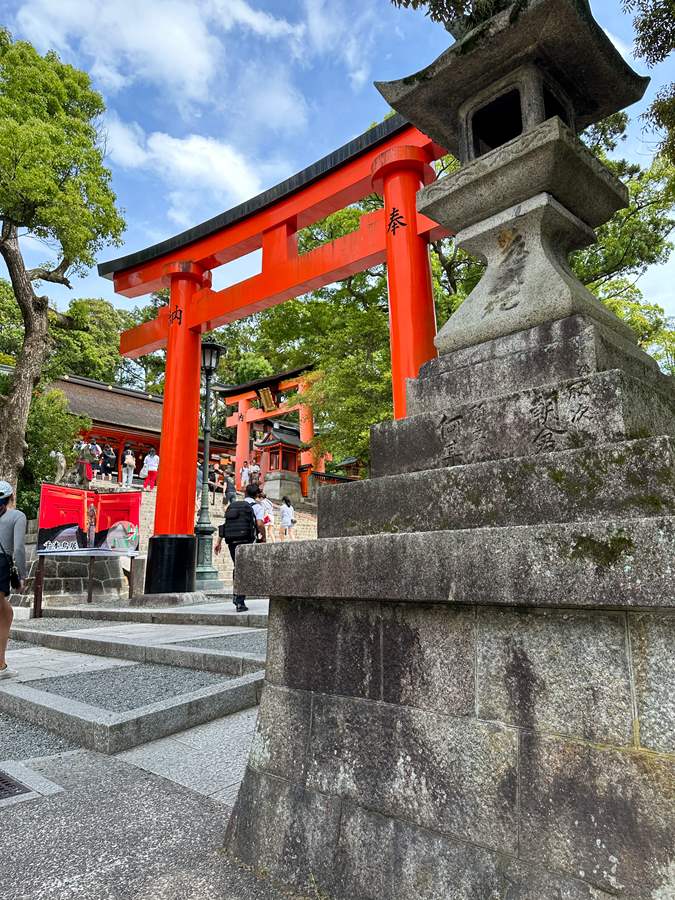
Traina had been to Tokyo before, so she arrived in Osaka with assumptions. She left with corrections. The transit system, often cited as one of Japan's more intimidating features for first-time visitors, turned out to be far more manageable than she had anticipated. "I was very pleasantly surprised as to how easy it was to purchase tickets and navigate myself through Osaka and neighboring cities," she says, noting that the station scale and line complexity that can overwhelm visitors in Tokyo simply wasn't a factor here.
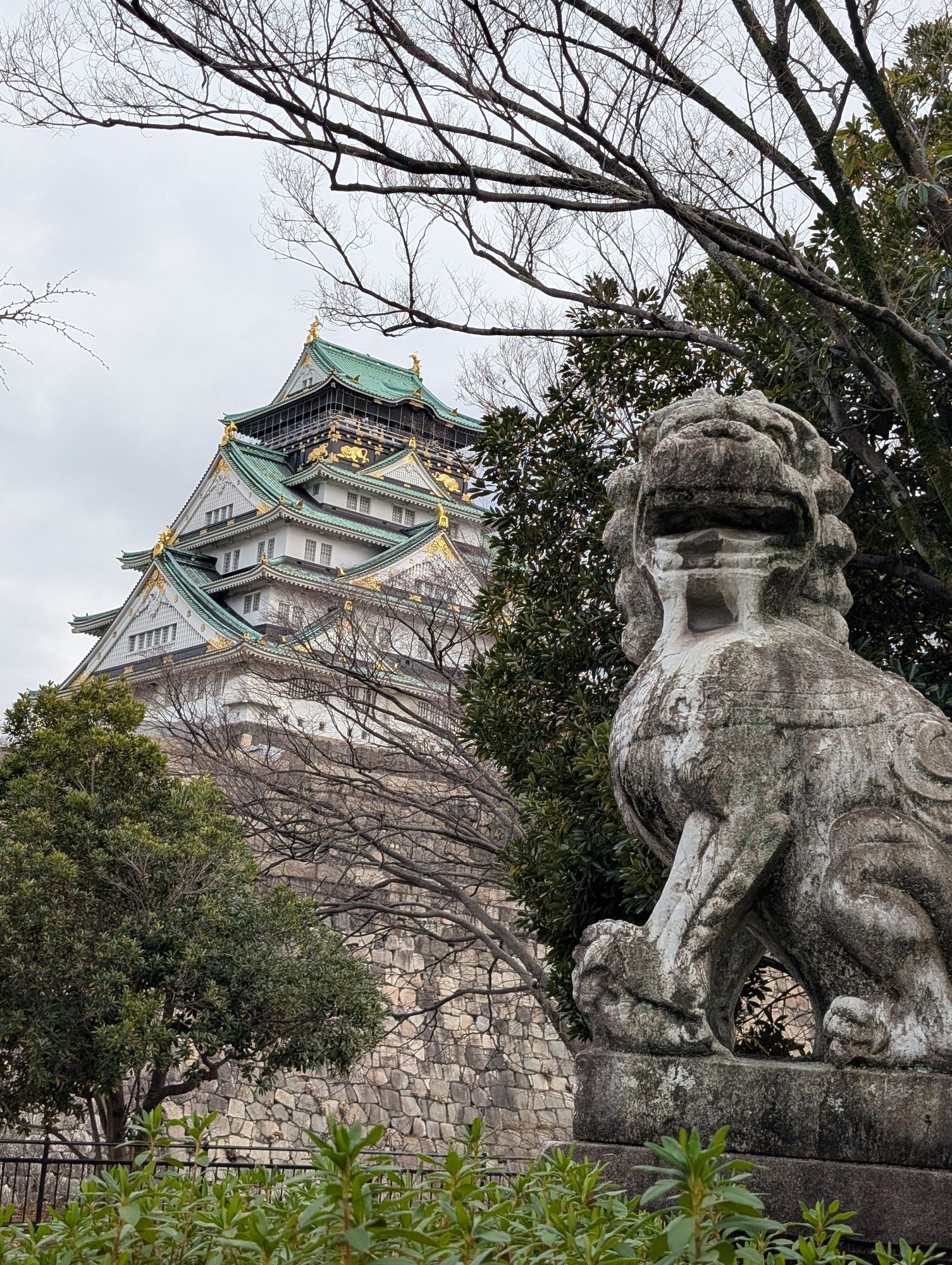
That ease of movement opened the region up in unexpected ways. Day trips to Nara and Kyoto became natural extensions of her Osaka life rather than logistical undertakings. She tasted her way through local food stalls, spent hours in arcades, visited the famous Osaka Aquarium, and rode the bullet train, checking off a personal bucket list item with the aquarium's whale sharks.
The Deer, the Professor, and a Three-Seat Restaurant
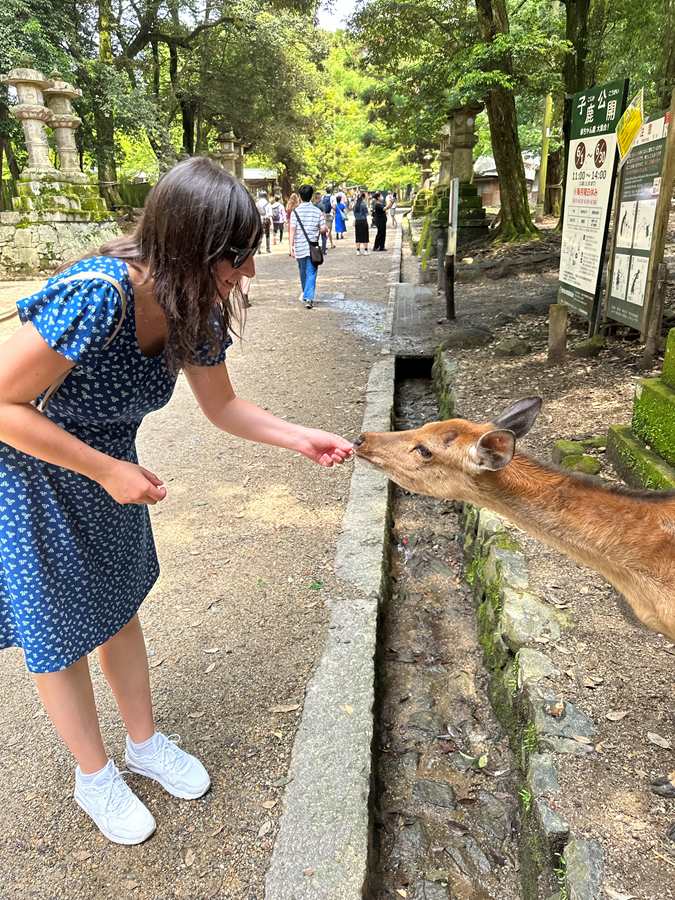
If there is one story Traina keeps returning to, it is from Nara. The ancient city, just a short direct train ride from Osaka, offered her something the bigger city simply could not: stillness, and the kind of unscripted human connection that defines genuinely memorable travel.
The deer that roam freely through Nara's parklands are well known, but Traina found that the sheer scale of the space created pockets of quiet intimacy. "Because of how expansive the deer roam, you really do get to have some private experiences," she says. Lunch that day was at a tiny local restaurant with just three seats. Seated beside a professor who had been visiting the same establishment for twenty years, traveling the same annual route to Kyoto University, Traina found herself inside a story that no guidebook could have written for her.
It was the kind of afternoon that only happens when a traveler slows down long enough to let the destination come to them.
Not All Japanese Cities Are Created Equal
One of the most valuable professional insights Traina brought home from this trip is a sharper, more nuanced understanding of how Japan's major cities serve different kinds of travelers. It is a distinction she says she could not have fully grasped without being there in person.
Her framework is elegant in its clarity. Tokyo, she argues, is the ideal first-time destination because it delivers the full spectrum of Japan in a single, endlessly varied city. Kyoto is for the history lover who doesn't mind sharing cobblestone streets with tour groups. Osaka, however, occupies a different lane entirely. "Osaka is very entertainment heavy, so if you're looking for things like visiting theme parks, or you're a huge foodie, this is the place to go," she says. But she is equally candid about its limitations for certain travelers, noting that the city lacks the kind of day-to-day variety that keeps longer itineraries feeling fresh.
Her insider tip on where to base oneself within the city is the kind of detail that only comes from walking the streets. Skip Osaka Station, she advises. Head to Namba instead. "That's where the core of the city is and it's much more connected," she says, a small but significant piece of knowledge that could reshape an entire trip.
Who Should Go, and Who Should Look Elsewhere
Traina is precise, and refreshingly honest, when it comes to matching travelers to this destination. Osaka, she says, is a natural fit for younger travelers, devoted foodies, and anyone drawn to entertainment, theme parks, vintage shopping, and the energy of a big city without Tokyo's sheer overwhelming scale. For senior travelers or those seeking a more traditional Japanese experience, she would point them elsewhere without hesitation.
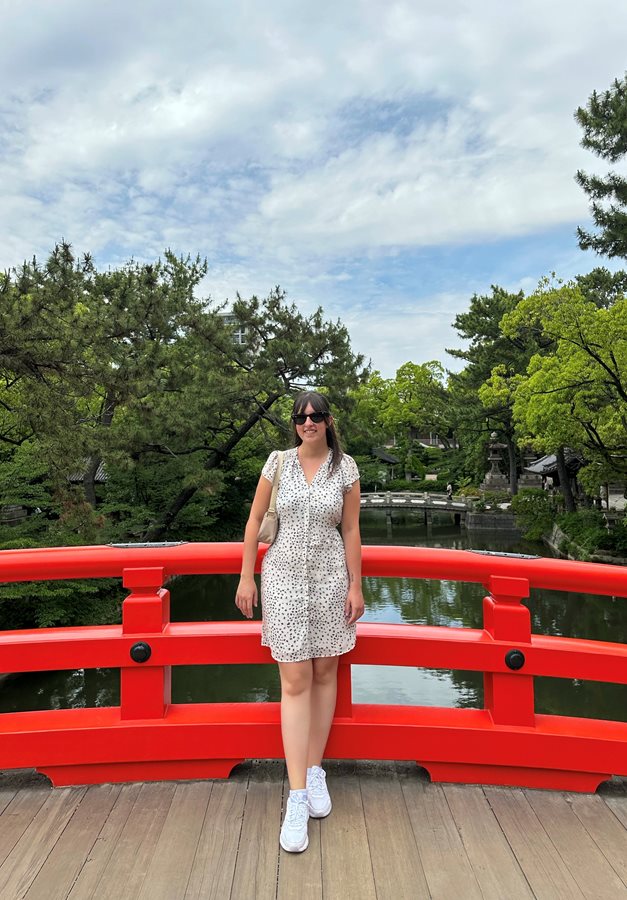
That kind of candor, the willingness to say a destination is not right for everyone, is one of the hallmarks of an advisor who has actually been there. "It's really something you can understand until you are there and walking around," she says. "It's not a town that you can feel looking at maps or reading online articles. You have to be there."
Her broader lesson from Japan and other Asian destinations applies universally: book early. The best pricing she has ever found, for herself and her clients, comes from looking at least six to eight months in advance. It is simple advice, but grounded in hard-won experience rather than industry boilerplate.
Round Two: Snow, Monkeys, and a Winter Journey South
Perhaps the most telling sign of how deeply Japan has taken hold of Traina is what comes next. She is headed back. This December and January, she will return for another five-week journey, this time chasing snow, hot springs, and the quieter, colder side of a country she clearly cannot stop exploring.
The itinerary reads like a love letter to rural Japan. Beginning in Tokyo before moving into the Nagano area to ski and visit the famous snow monkey park, the trip will then arc through Shirakawa-go, Takayama, Kanazawa, and Komatsu, tracing the coast's famously snow-draped landscapes before sweeping south through Osaka and into the Kyushu prefecture to visit volcanic landscapes and soak in onsen.
For Traina, the journey is both personal and professional. Every town she walks through, every train she boards, every bowl of something unexpected she tastes becomes part of the knowledge she brings back to her clients. "Luckily I have been there and know this now," she says, and in those words is exactly the quiet confidence that separates a great travel advisor from a well-meaning one. Japan, it seems, has not finished teaching her yet.