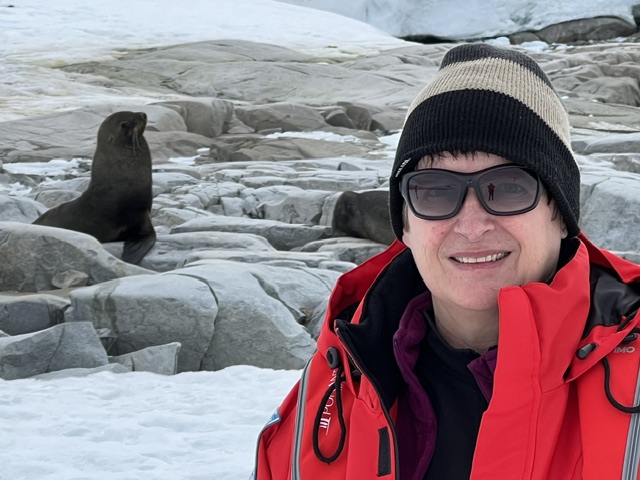
When travel advisor Theresa Bobrowsky sailed to Antarctica aboard a Ponant expedition ship, she discovered that no amount of professional training could fully prepare her for the raw, otherworldly power of the world's most remote continent.
At a Glance
Antarctica's expedition cruises require proper merino wool clothing, waterproof gear, and mental flexibility for unpredictable itineraries. The continent delivers extraordinary wildlife encounters—breaching whales, thousands of chattering penguins, calving ice—alongside unexpected human moments. Success depends on embracing uncertainty and understanding that the monochromatic landscape and foreign soundscape create a uniquely disorienting yet transformative experience.
There are destinations that travel advisors recommend with confidence, and then there is Antarctica. For Theresa Bobrowsky, a seasoned travel specialist with deep industry connections and a husband who had already made the voyage south, the White Continent was a place she thought she understood. She was wrong, in the most magnificent way possible.
Bobrowsky joined her husband on a Ponant expedition sailing to Antarctica, with him serving as one of the guest speakers aboard. The arrangement gave her a rare freedom. Unburdened by professional obligations, she could simply experience the journey as a traveller, absorbing every detail with fresh eyes and a professional's instinct for what matters.
The Build-Up Begins Before the Ship
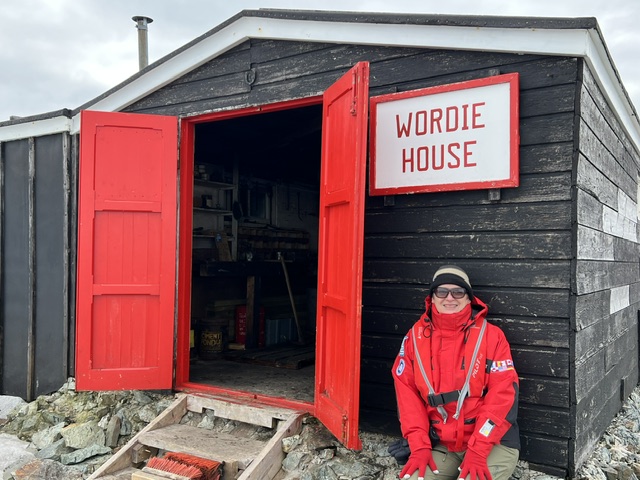
The adventure started even before boarding. While waiting in Ushuaia for the ship to be readied, Bobrowsky and her husband explored Parque Nacional Tierra del Fuego, where they had a chance encounter with a young man who had just completed a multi-month journey along the Pan American Highway. It was a foreshadowing of the unexpected moments that would define the entire trip.
Then came the Drake Passage, that legendary stretch of open ocean between South America and the Antarctic Peninsula that looms large in every expedition traveler's imagination. Bobrowsky's crossing fell somewhere between the coveted "Drake Lake," where seas run glassy and calm, and the notorious "Drake Shake," where rough swells test every passenger's resolve. "My experience reinforced the professionalism and skill of the Captain and crew on the ships," she reflects, noting that she had almost let fear of the Drake Passage stop her from making the journey at all.
As the ship pushed southward, the transformation of the environment unfolded gradually and deliberately. Marine life appeared first, then birds, and then the ice began coming into sharper view. Passengers were briefed on zodiac safety and leave-no-trace principles. Expedition team members delivered talks in their fields of expertise. All of it, Bobrowsky says, built toward one electrifying moment: the first zodiac landing on Antarctic soil.
A World That Sounds Like Nothing Else
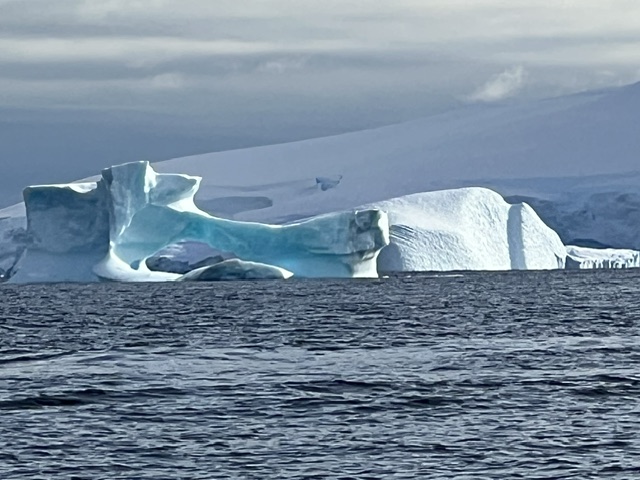
One of the most unexpected revelations of the journey was not visual but psychological. The stark, almost monochromatic landscape of black rock, white ice, and grey sky had an effect on Bobrowsky that she had not anticipated. "I did not realize how important colour was in my world," she says. "While most people were unaffected it left me feeling a bit unnerved." She has since met other travellers who describe the same sensation, a quiet disorientation in the face of such elemental simplicity.
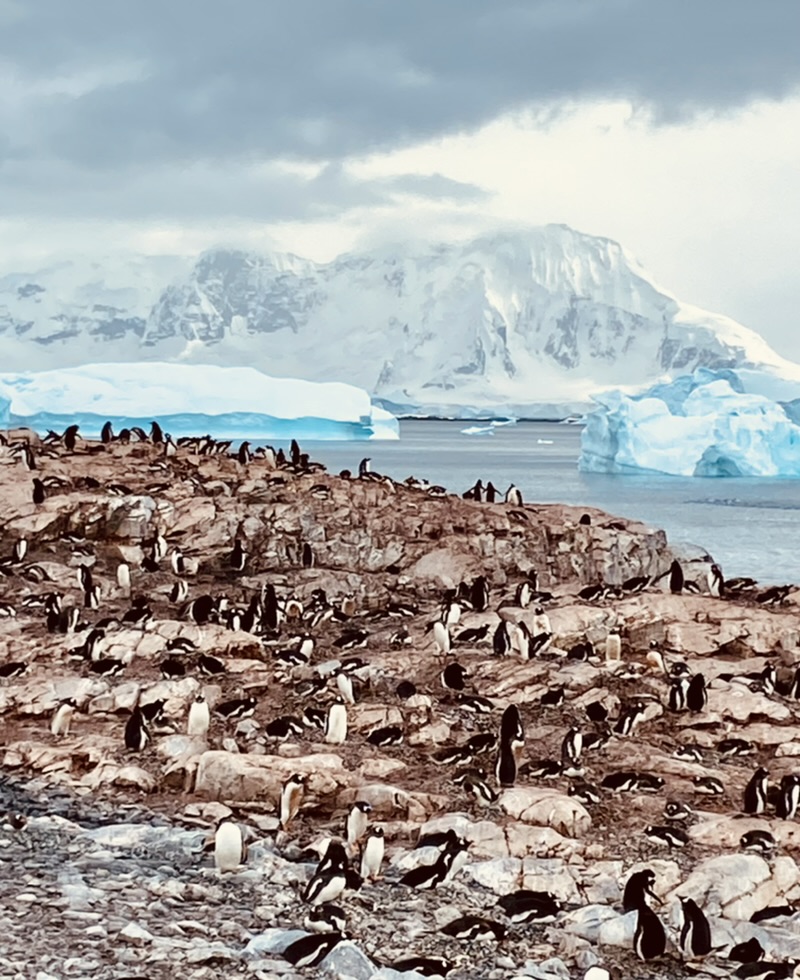
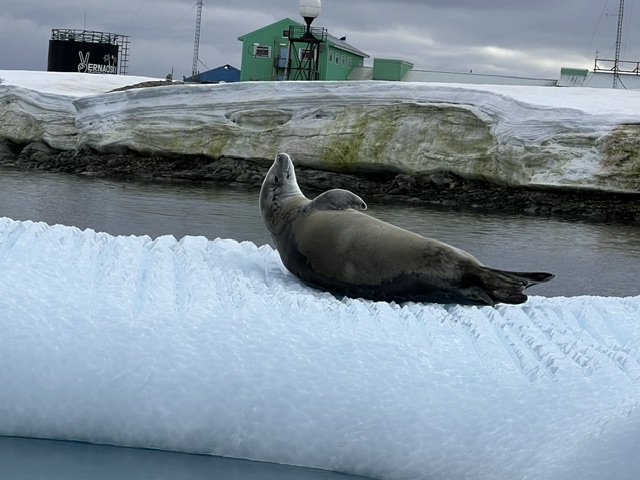
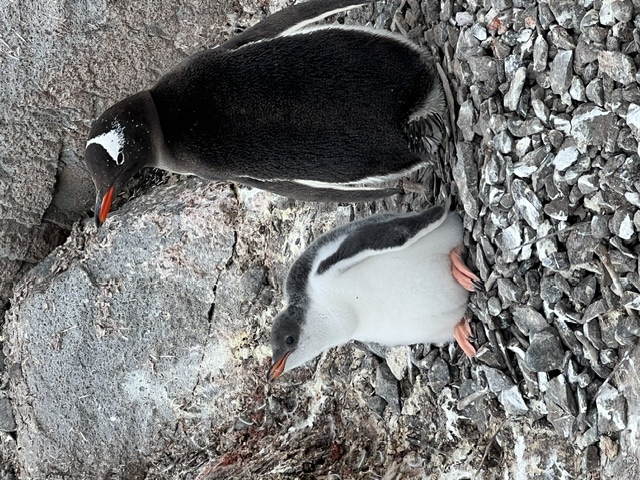
And yet the continent was anything but silent. Whales breached and dove. Penguins chattered in their thousands. Seals lounged on ice floes. The ice itself groaned and cracked as it calved into the sea. "You would think somewhere as remote as Antarctica would be very quiet," Bobrowsky notes, "but between the whales breaching and diving, the penguins chattering, the birds, the seals and other wildlife, and the crackling and calving of the ice, there were so many sounds, most foreign to the ear."
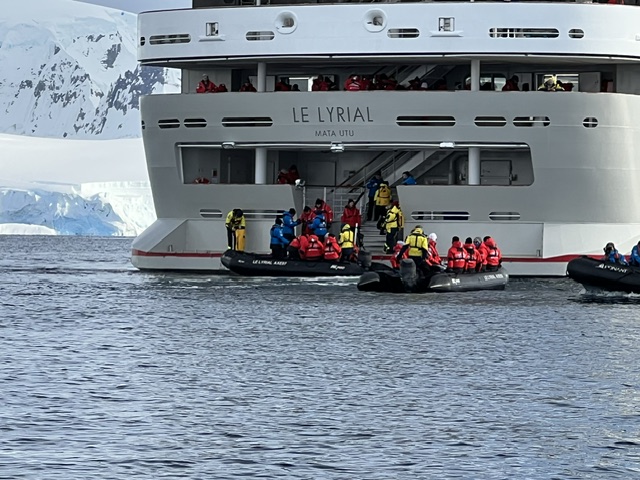
The wildlife encounters were extraordinary, but it was the human stories threaded through the expedition that gave the journey its texture. A small vessel had strategically tied its lines to block the path of the Ponant ship, resulting in a negotiation that concluded with the small boat's captain moving his lines in exchange for a supply of baguettes and patisseries. Fresh fruit and vegetables were delivered to the Vernadsky Research Station. These moments, improvisational and human, reminded Bobrowsky that even in the most remote place on Earth, life finds a way to be warm and inventive.
The expedition team delivered what Bobrowsky describes as nothing short of perfection. All twelve planned landings were completed, despite the Antarctic's famously unpredictable weather and sea conditions. "They knocked it out of the park and then some," she says of the Captain and Expedition Manager whose skill and judgment made it possible.
What No Training Can Teach You
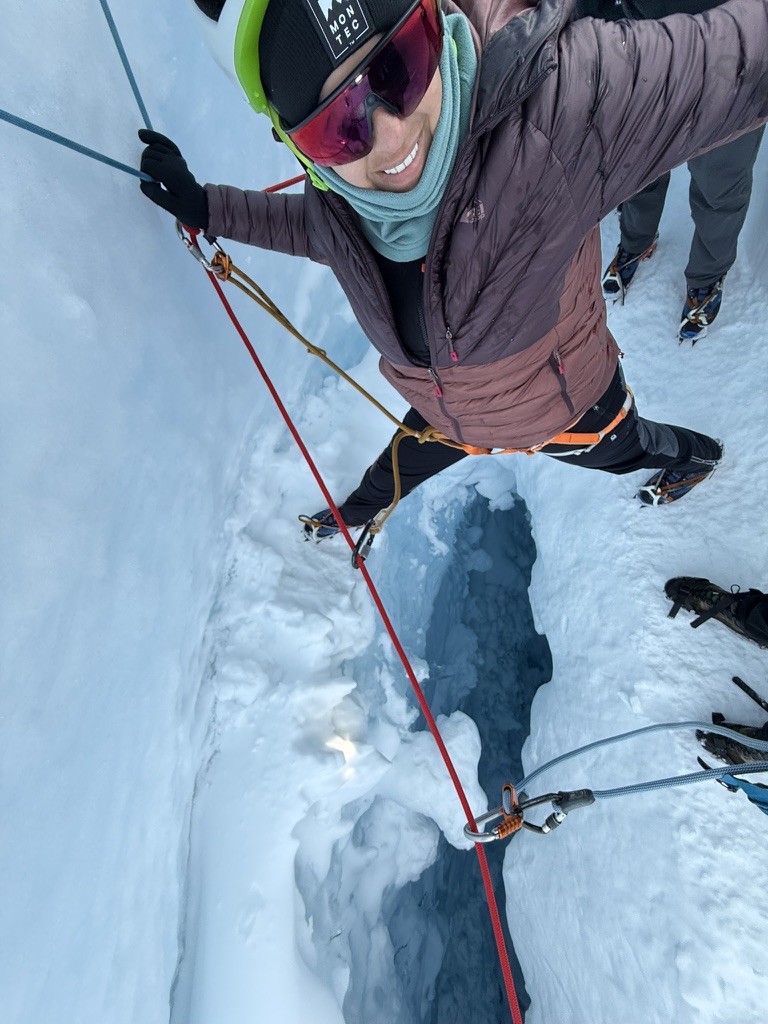
As a travel specialist with access to global destination experts, Bobrowsky arrived in Ushuaia better prepared than most. And still, the experience revealed gaps that only firsthand knowledge could fill. Chief among them was the critical importance of clothing. Merino wool base layers to wick moisture away from the skin, waterproof pants for wet zodiac landings, and the water-resistant parkas provided by the cruise line are not optional luxuries. They are the difference between comfort and misery. "This is a trip of a lifetime," she advises. "Spend a bit of money on clothing. It will be great for other trips and activities."
She is equally emphatic about flexibility. Itineraries in Antarctica are fluid by necessity, governed by the Captain's moment-to-moment assessment of safety conditions. For travellers who are easily unsettled by changes of plan, the continent can be a challenging environment. For those who embrace the uncertainty, every redirected excursion becomes its own reward.
Bobrowsky also passes along two pieces of advice that only a traveller who has lived them would think to share. If someone announces humpbacks on the starboard side, wait five minutes and they will appear on the port side too. And if the Captain's voice comes over the intercom at five in the morning, get dressed immediately and get on deck. Something remarkable is happening, and the Captain does not want a single guest to miss it.
Who Belongs on This Voyage
In Bobrowsky's assessment, the ideal Antarctic traveller is intellectually curious, physically active without needing to be an athlete, passionate about wildlife, and genuinely enthusiastic about the unexpected. Photographers will find the destination transformative. Solo travellers are welcomed, and promotions with reduced or waived solo supplements sometimes make the journey more accessible than expected.
Those for whom the trip may not be the right fit include travellers with mobility challenges that would make boarding and disembarking from zodiacs difficult, those who are severely prone to motion sickness without a mitigation plan, and anyone unable to qualify for emergency medical insurance that includes evacuation and repatriation, which is a mandatory requirement for all passengers.
Timing matters too. The Antarctic season runs from November to March, and the experience shifts meaningfully across those months. Early in the season brings penguin courtship and nest building. Later arrivals see chicks and the molting period. Those hoping to spot Emperor Penguins must plan for an itinerary that ventures into the Weddell Sea and reaches Snow Hill Island. There is no substitute for matching the traveler's goals to the right timing and the right ship.
The Journey Continues
Bobrowsky has not slowed down since her Antarctic voyage. At the time of writing, she was off the coast of Greenland, bound for the remote northwestern reaches of Iceland, completing a journey that began in the sweltering summer heat of New York City. Next on her agenda is an expedition with HX Expeditions, departing from Nome, Alaska, aboard the purpose-built MS Fridtjof Nansen, sailing through the Aleutian Islands and down the coast of British Columbia to Vancouver. No jewellery shops, no crowds, no seven cruise ships jockeying for position in Skagway. Just zodiacs, brown bears, science labs, and the kind of deep wilderness immersion that has come to define her travel philosophy.
"I look forward to sharing the details with you in the future," she says, with the unhurried confidence of someone who already knows the next chapter will be worth telling.