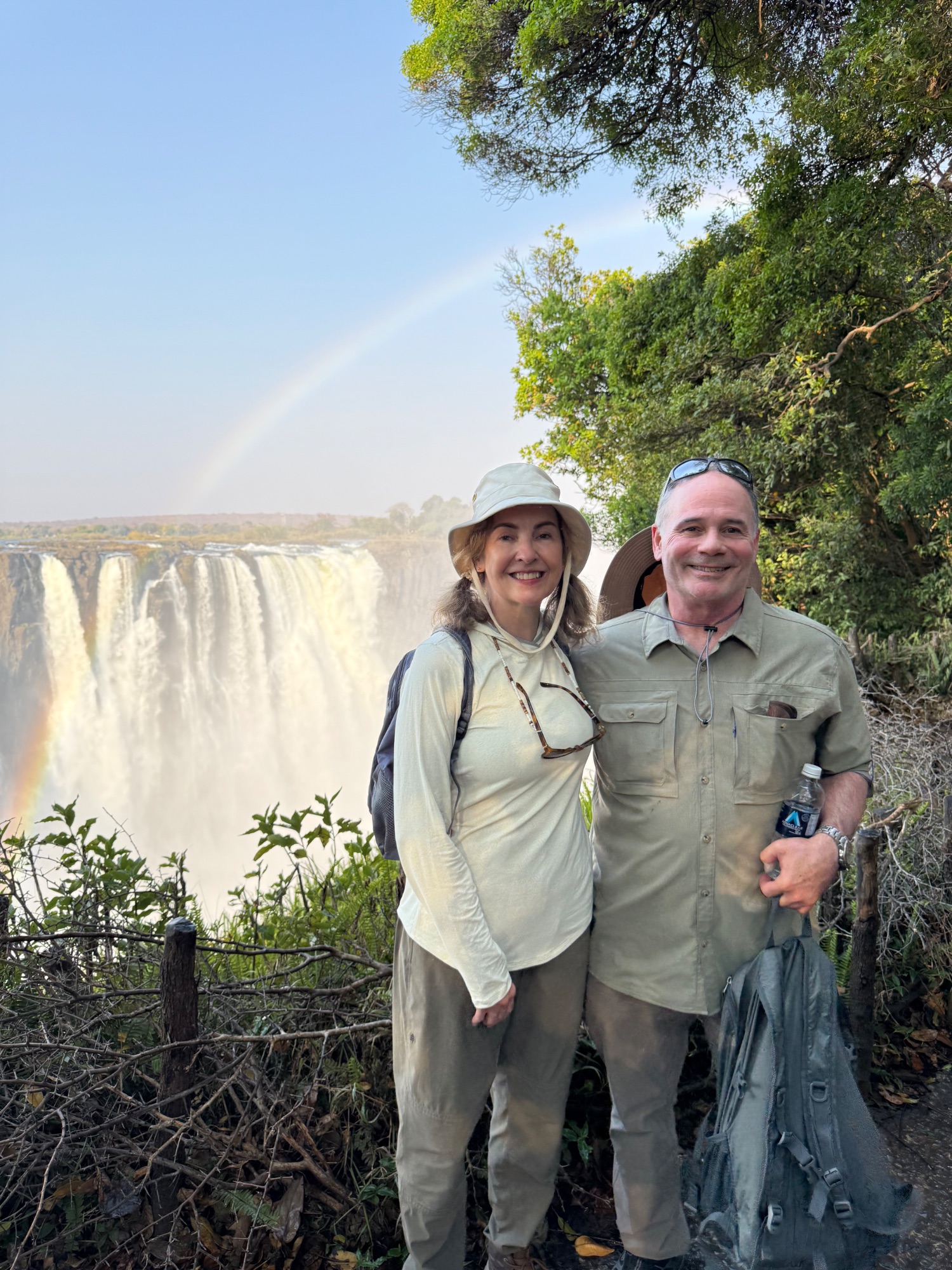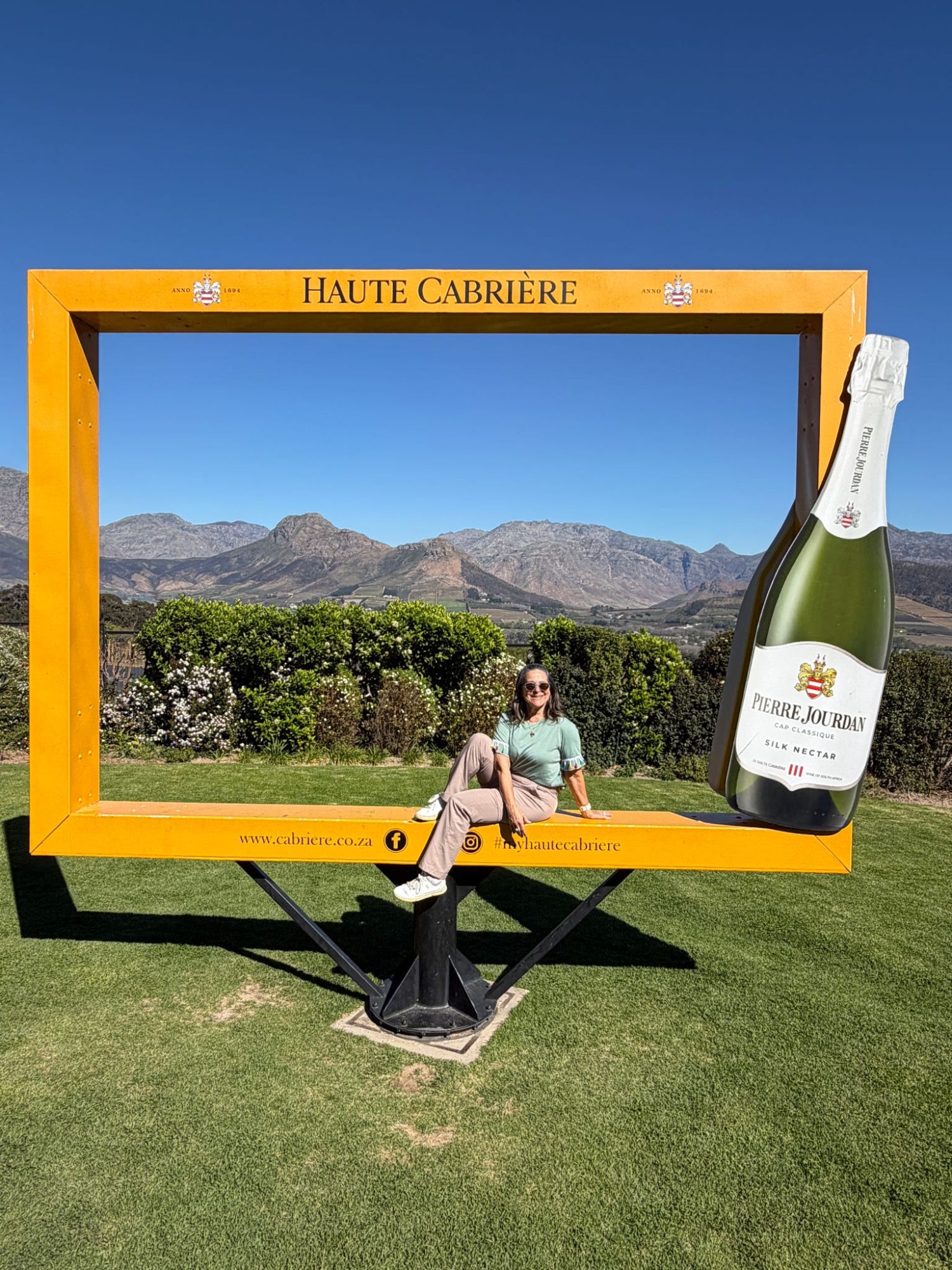
Three trips across some of Africa's most breathtaking landscapes, and travel advisor Colleen Johnson is already counting down to her fourth.
At a Glance
South African safaris deliver unscripted wildlife moments—elephants commanding watering holes, warthogs charging fearlessly beneath them, baboon migrations across open fields—that reveal the continent's natural hierarchy and scale. Experienced guides read tracks, broken branches, and bird calls to locate animals through skill, not luck, creating encounters no brochure can replicate.
Picture this: lunch is laid out in a quiet semicircle in the African bush. The guides have found a spot near a watering hole, and for a moment, everything is still. Then the elephants arrive. Unhurried and commanding, they move through the camp with the easy authority of creatures who have never once questioned their place in the world. The giraffes and zebras sense it immediately, stepping back, yielding the path without hesitation. And then there are the warthogs. Small, bristled, and entirely unbothered, they dart in between and underneath the elephants' legs and charge straight to the water. No deference. No waiting. Just pure, comic determination.
For Colleen Johnson, a travel advisor who has now visited Africa three times with three separate client groups, that single scene captures everything the continent is and everything it refuses to be tamed into. "Watching the natural pecking order as the elephants come in, the giraffes and zebras back off, and the little warthogs didn't care," she recalls with a warmth that makes clear this memory has been told and retold with equal delight every time. "They just ran in between and underneath all of the elephants and went straight to the watering hole." It is funny, majestic, and utterly unscripted. It is Africa in one image.
A Lifelong Dream, Lived Three Times Over
Johnson's connection to the continent runs deep and long. "All my life I thought I wanted to go to South Africa," she says, describing a pull that felt less like wanderlust and more like a calling. What followed that first journey was something she could not have anticipated: a return, and then another, spanning Botswana, Victoria Falls, Cape Town, Kenya, and Tanzania. Each trip brought new clients, new landscapes, and new encounters that no brochure could have prepared her for.
It was on one of these safaris, cresting a rise in an open game vehicle, that Johnson witnessed what she now describes with barely contained amazement as a baboon migration. "All of a sudden we see a massive number of baboons running across this open field with little ones hanging on their bellies and on their backs as they ran across the field," she says. "It was like a baboon migration." The image, equal parts tender and wild, is exactly the kind of moment that separates a lived experience from a researched one. It is the kind of story a client remembers long after the flight home.
The Scale That Silences You
Beyond the specific encounters, what continues to move Johnson is something harder to photograph and impossible to fake: the sheer, staggering scale of it all. "What surprises me is the vast landscape and that there is still a natural environment where these huge animals can live in their own environment," she reflects. There is reverence in the observation, the quiet amazement of someone who has stood inside something enormous and felt it change her.
That change, she says, is permanent. "Once you've experienced Africa, part of your heart will always remain there." It is the kind of statement that lands differently coming from someone on their third trip than it would from someone on their first. For Johnson, it is not a travel cliché. It is a fact she has tested, returned to, and confirmed again and again.
What the Guides Know That You Don't
One of the most distinctive things Johnson brings back from each trip is not just a collection of memories but a deeper understanding of how the experience actually works, the knowledge behind the curtain that most travellers never see. Her insider tip is deceptively simple: pay attention to the guides. "Watch the guides," she says. "They are very experienced trackers and don't find the animals by luck. They are always reading the bush, noticing the tracks, listening to the birds, watching the landscape. Broken branches around them. They are all clues." It is a window into an entire professional tradition, a form of expertise built over lifetimes, and Johnson speaks about it with the kind of informed respect that only comes from watching it up close.
That professional-level observation is exactly what Johnson carries back to her clients. When she describes a safari, she is not narrating a highlight reel. She is translating a living ecosystem, explaining why the vehicle stopped where it did, why the guides tilted their heads toward a particular tree, why stillness and patience are not just virtues but strategies.
Every Safari Is Its Own Story
When people ask Johnson whether she gets bored returning to the same continent, the answer is immediate and emphatic. "Absolutely not," she says. "Every safari is different and you cannot compare one trip to the next because each experience is different." Sometimes it is a rare pack of wild dogs. Sometimes it is a bush baby materializing in the darkness. And always, reliably, there is the sundowner, that distinctly African ritual of drinks held at golden hour as the sun melts into the horizon. "I will definitely not get tired of having a sundowner and watching the amazing sunset," she says. "These moments are never boring."
It is this truth, that Africa resists repetition, that makes Johnson such a confident guide for first-timers and returning travellers alike. She is not selling the same trip twice. She is opening a door to an experience that will write itself differently every single time.
The Best Advice She Has Ever Given
After three trips and countless golden sunrises, after elephants and warthogs and the thunder of a baboon migration, after sundowners and silences and skies wide enough to reorder your sense of scale, Colleen Johnson's most important advice to anyone heading to Africa is this: put down the camera. "Don't make it all about your camera," she says. "Be in the moment. Go with an open mind. Sit in the silence and just watch Africa unfold around you. It is truly amazing." It is the advice of someone who has learned, experientially, that the most profound things cannot be captured. They can only be felt.
As for what comes next for Johnson herself, Africa is not going anywhere, and neither is her sense of adventure. Her fourth group is already in the works. And beyond that, she has her sights set firmly on Antarctica, another of the few places on Earth that feels genuinely untouched. For an advisor whose recommendations are always earned firsthand, that next horizon is not just a personal goal. It is a promise to every future client that she will always have been there first.
If Africa has been on your mind, the best place to start is a conversation with someone who has felt that pull, followed it three times, and is already going back.