A first-generation Portuguese American travel advisor and a brand-new nonstop flight from Orlando prove that Portugal is a destination that never runs out of depth — no matter how many times you go back.
At a Glance
Cabo Da Roca, on Portugal's westernmost tip in the Sintra-Cascais Natural Park, marks where the Iberian Peninsula meets the North Atlantic. A 17th-century tiled lighthouse houses a museum, surrounding beaches arc below dramatic cliffs, and coastal hiking trails offer solitude punctuated by wind and crashing waves.
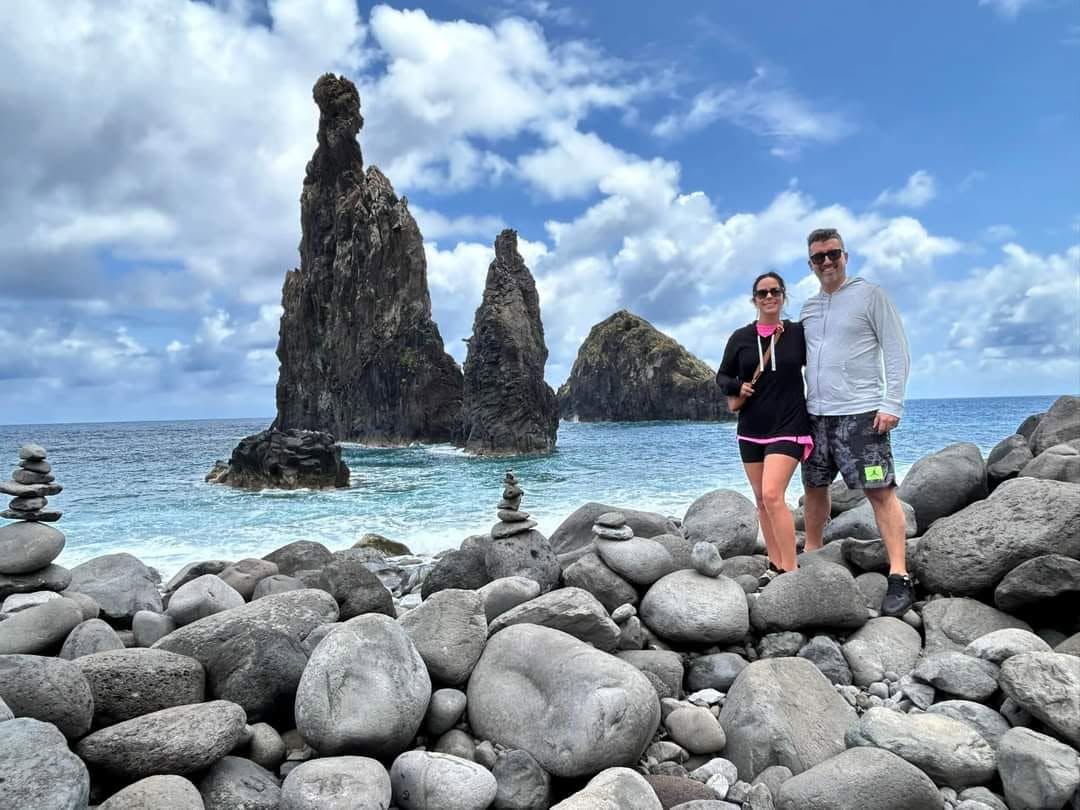
Stand at the edge of Cabo Da Roca, on the westernmost tip of the Iberian Peninsula, and you understand immediately why the people who came before Magellan believed this was where the world simply stopped. The cliffs drop away into the North Atlantic. The winds push through the coastal grasses with enough force to remind you that civilization ends here, and ocean begins. As Smalling puts it, "Before Magellan, the famous 15th century explorer circumnavigated the earth and proved the world to be round, Cabo Da Roca was considered the 'end of the earth' to many." She stood there recently, the Atlantic wind in her hair, the sound of crashing waves below, the occasional seagull wheeling overhead, and felt the same awe she might have expected on a first visit. It was not her first visit. It was not her second, or her fifth. Elaine Smalling, travel advisor at Hill's Travel Service in Florida and a first-generation Portuguese American, has traveled to Portugal more than ten times in her life. And this trip still stopped her in her tracks.
The Edge of the World, Revisited
The occasion was a FAM Tour hosted by TAP Air Portugal, organized to celebrate the launch of a new nonstop route between Orlando International Airport and Lisbon Airport, a service that began operating on October 29, 2026, running three days per week. The tour took Smalling and fellow travel professionals through Lisbon, the Portuguese Riviera towns of Cascais, Estoril, and Sintra, and deep into the Alentejo countryside to the UNESCO World Heritage city of Évora. Partners including Visit Portugal, IntoTravel DMC, and VIP Executive Hotels shaped the itinerary, and the experience was anything but routine.
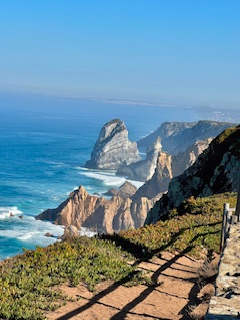
At Cabo Da Roca, inside the Sintra-Cascais Natural Park, Smalling found what she describes as one of her most memorable moments from any Portugal visit. The 17th-century tiled lighthouse houses a museum and gift shop, the surrounding beaches stretch out below the cliffs in brilliant arcs, and the coastal hiking trails offer a rare kind of silence punctuated only by wind and water. "The views are spectacular and the surrounding beaches are some of the most beautiful in Portugal," she says, with the calm certainty of someone who has earned that comparison. For a destination she has known her entire life, the intensity of that moment was its own kind of revelation.
Palaces, Convents, and the Art of Luxury Hidden in Plain Sight
If Cabo Da Roca was the emotional peak of the tour, the Virtuoso properties Smalling visited provided its most surprising professional discovery. She had not expected the density of five-star historic properties in and around Lisbon, nor the layers of history embedded in each one.
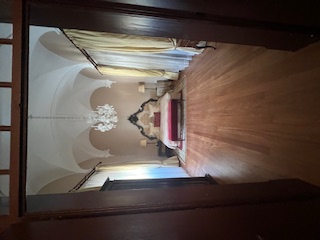
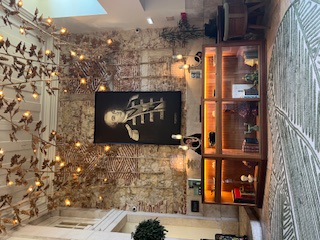
The Palácio Ludovice Wine Experience Hotel sits in the heart of Lisbon at the intersection of the Chiado, Bairro Alto, and Príncipe Real neighborhoods, overlooking the panoramic sweep of the São Pedro de Alcântara Viewpoint. It was once the private residence of João Frederico Ludovice, the 18th-century architect who served King João V, and its walls survived the catastrophic 1755 Lisbon earthquake, fires, and tidal wave that reduced much of the city to rubble. Since February 19, 1946, the building has also housed the Port Wine Institute's Solar do Vinho do Porto, where Lisboners have been coming for port ever since. Today, some 150 Ports and Douro wines are still poured there under the Institute's management. To walk through the Palácio Ludovice is to move through centuries of Portuguese identity in a single afternoon.
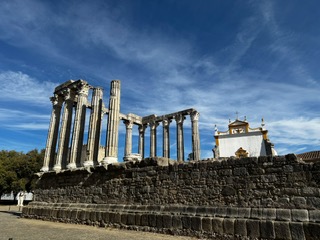
Then came Évora, and the Convento do Espinheiro Hotel and Spa. The drive into the Alentejo opens onto rolling farmland, the landscape soft with olive groves and cork oak, the air quieter than anything the city allows. Évora itself is a medieval walled city where a Roman temple and the infamous Chapel of the Bones coexist within walking distance of each other. And at its edge, the Convento do Espinheiro has been offering what Smalling calls exactly "what the Portuguese royals have known for centuries, sanctuary." It is a property she has been sending clients to for years. Seeing it again through fresh professional eyes only deepened her conviction that it belongs on every serious Portugal itinerary.
The Flight That Changes the Equation
For Florida-based travelers, the new TAP Air Portugal nonstop from Orlando has practical implications that go beyond mere convenience. The flight departs the state-of-the-art international terminal at MCO at 9:40 PM, allowing passengers to settle in for a natural overnight sleep across the Atlantic. It arrives in Lisbon at 10:40 AM, after the rush of early morning international arrivals has cleared. The timing is deliberate and the effect, Smalling notes, is transformative. "With a good night sleep, a delicious onboard breakfast, passengers arrive ready to enjoy the afternoon in Lisbon." She adds that the crew was friendly and professional, the cabin modern and clean, and the schedule as close to ideal as transatlantic travel gets. For anyone who has talked themselves out of Europe because of the logistics, this route removes one of the last remaining excuses.
Who Portugal Is For, and How to Do It Right
Smalling is unequivocal about Portugal's breadth of appeal. The welcoming climate, the geographical diversity from mountain ranges to Atlantic coastline, the food and wine, the history, the nightlife, the sporting events, all of it adds up to a destination that genuinely has something for every kind of traveler. But she is equally clear about the most common mistake people make when they go.
Portugal is small but dense with experience, and rushing it does it a disservice. Her recommendation is to treat the country as a multi-trip destination rather than a single grand tour. A first visit might take travelers into Lisbon, south through the Alentejo, and into the Algarve. A second visit could begin in Porto and move through the Douro Valley, north to Portugal's birthplace in Guimarães and Braga, and across into Spain's Galicia by car ferry. The Azores and Madeira deserve their own dedicated journeys entirely.
For first-time visitors navigating the old historic cities, she also offers a piece of practical advice that most travelers only wish they had received before they went. Portugal's medieval towns were built along coastal cliffs and steep mountain ranges, meaning the roads are narrow, winding, and demanding in ways that GPS alone cannot prepare you for. "Having a knowledgeable and experienced driver and guide will help you to relax and take in all the sights and scenery," Smalling says. "They will also ensure you don't miss the hidden treasures often found off the beaten track." The investment, she insists, pays for itself in peace of mind and in the moments you would otherwise have driven straight past.
Saudade, and What Comes Next
At Hill's Travel Service, the approach Smalling brings to Portugal is the same one she brings to every destination on her client list. The process begins with questions, genuine ones, about preferences and passions, concerns and bucket list experiences. The goal is not to sell a destination but to find the right fit for each individual traveler. Having walked the streets of Évora, stood in the solar of the Palácio Ludovice, and felt the Atlantic wind at Cabo Da Roca, she can make those recommendations with a specificity that no brochure can replicate.
As for where Smalling is headed next, she hints at Italy, long overdue on her personal travel list after years of choosing less-traveled European paths. But she is candid about where her heart keeps returning. Every departure from Portugal carries the same weight it always has. "Every time I leave," she says, "I experience a longing to return which the Portuguese call, saudade." For a first-generation Portuguese American who has made this journey more than ten times and counting, that longing is not a problem to be solved. It is the truest endorsement a destination can receive. And for the clients of Hill's Travel Service who are ready to feel it for themselves, Smalling invites them to reach out, share their travel wishlist, and let her show them where Portugal fits in it.