After a comprehensive boots-on-the-ground journey through one of Canada's most storied and underestimated destinations, travel advisor Ronnie Lee returns with a clear-eyed verdict: Newfoundland and Labrador is not a side trip — it is the destination.
At a Glance
Newfoundland and Labrador rewards slow travel through layered history: the Viking Trail leads to L'Anse aux Meadows, while the overlooked Labrador Airport Museum preserves transatlantic aviation heritage. Spring and fall offer icebergs and solitude; the region demands its own dedicated itinerary, not a Maritime add-on, and rewards physical effort with intimate historical immersion.
There is an airport museum in Labrador that most travellers drive straight past. It sits quietly, easy to overlook, easy to dismiss. Ronnie Lee did not drive past it. And the moment Lee stepped inside, something shifted. "The Labrador Airport Museum is a gem," Lee says, "with rich history from when flights used to have to travel here before heading to Europe." That single stop, a relic of transatlantic aviation history hiding in plain sight, became the emotional peak of a journey that was already full of discovery. It also became the clearest proof of something Lee brought home for every future client: there are things you simply cannot know until you go.
Lee, a travel advisor who recently completed a comprehensive Newfoundland and Labrador tour with McCarthy's Party, made the trip as a professional on a mission to understand a destination from the inside out. What came back was not just a checklist of sights visited, but a layered, hard-won understanding of a place that rewards patience, curiosity, and a willingness to move slowly through deep history.
The Viking Trail and the Visual Spine of the Journey

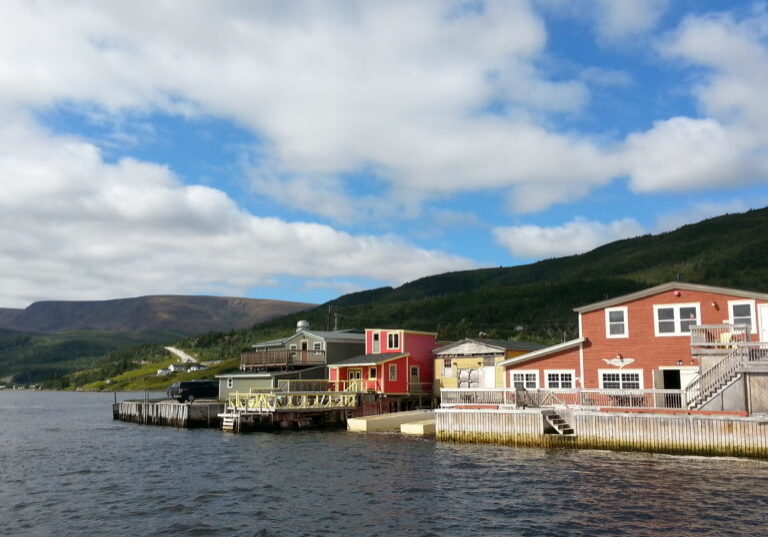
The road itself tells the story. Driving along the Viking Trail, the landscape unfolds with a scale that is difficult to prepare for. Ancient coastlines, wind-shaped terrain, and national parks that carry the weight of centuries press in from every direction. Lee describes the journey as moving through "the Viking Trail, national parks, history, Twillingate Island," each location building on the last like chapters in a book written over a thousand years. Twillingate Island, known for its icebergs and sea-battered charm, offers a particular kind of quiet drama that lingers long after the drive is done.
This is not a destination that reveals itself quickly. The Viking Trail alone demands time and attention. L'Anse aux Meadows, the UNESCO World Heritage Site where Norse explorers made landfall over a millennium ago, is not a place to tick off and move on from. It is a place to stand still inside of. Lee understood this not from a brochure, but from standing there.
The History That Surprises You
One of the most striking things Lee came away with was the sheer depth of settler history woven into the landscape. "The long history of settlers in Newfoundland and Labrador, whaling sites, historic sites and museums," Lee reflects, describing what the region holds beneath its rugged surface. Whaling heritage, Indigenous history, and the layered story of European contact and settlement do not sit behind glass in this part of Canada. They exist in the land itself, in the coastlines, in the bones of communities that have been there for generations.
The Labrador Airport Museum fits into this story in an unexpectedly moving way. Before the era of long-range aircraft, every transatlantic flight bound for Europe made a mandatory stop in Labrador to refuel. For a brief but vivid chapter in aviation history, this remote corner of Canada was a crossroads of the world. Most travellers have no idea. Lee now does, and that knowledge becomes a gift passed directly to clients.
An Honest Note on the Physical Demands
Lee is candid about one element that caught even a seasoned traveller off guard: the physical demands of the trip. Getting to many of the most significant sites means walking, and often hiking, across terrain that does not compromise for comfort. This is not a destination designed for those who prefer to experience history through a coach window. The sites reward effort, but they require it.
For the right traveller, this is part of the appeal. Lee is clear that the experience can be shaped to suit different comfort levels, whether that means lacing up for proper hikes or simply walking to key viewpoints. "Anyone can enjoy it," Lee notes, "from walking and hiking adventures or driving to all the sites." The key is knowing this going in, which is precisely the kind of insight that separates a well-prepared trip from a frustrating one.
When to Go, and What to Expect
On timing, Lee is direct. "Newfoundland and Labrador and the Maritimes is worth the visit either in the spring or fall." Summer draws crowds. Spring offers a landscape still shaking off winter, icebergs drifting along the coast, and a quieter, more intimate version of the destination. Fall brings dramatic colour and a golden-hour quality of light that photographers and wanderers alike find irresistible. Both seasons offer something the height of summer cannot: space to breathe.
The question of how to structure the trip is where Lee's professional judgment is perhaps most valuable. It would seem natural, looking at a map, to combine Newfoundland and Labrador with a broader Maritime itinerary. Prince Edward Island, Nova Scotia, New Brunswick, all within reach. But Lee is firm: "I would recommend Newfoundland and Labrador as a trip on its own. Combining it with the rest of the Maritimes would be too long." This is the kind of recommendation that saves a client from a common and costly planning mistake, the kind that only comes from having done the miles yourself.
A Destination That Earns Its Own Itinerary
What Lee brought back from this journey with McCarthy's Party is something more than a collection of highlights. It is a calibrated, experience-tested understanding of a destination that has been underestimated for too long. The Viking Trail, the whaling history, the transatlantic aviation legacy at the Labrador Airport Museum, the physical honesty of the terrain, all of it adds up to a destination that is complete, complex, and worthy of full attention.
For clients who want to stand inside history rather than observe it from a distance, who are willing to move at the pace the land demands, and who understand that the best travel experiences are rarely the quickest ones, Lee has a destination and a recommendation shaped by real experience, not a brochure.
As for what comes next, Lee is already looking beyond the Atlantic. With China on the horizon as the next adventure, it is clear that the curiosity driving these journeys, and the insights they produce for clients, shows no sign of slowing down.