When a silver fern leaf was placed at his feet on the Waitangi Treaty Grounds, travel advisor Marc Geuzinge discovered that New Zealand's soul runs far deeper than any cruise itinerary can reach.
At a Glance
The Waitangi Treaty Grounds in New Zealand's Bay of Islands host authentic pōwhiri ceremonies where visitors participate in traditional Māori welcoming rituals. The experience involves meeting a Māori chief, maintaining eye contact across a silver fern leaf, and gaining entry to the sacred meeting house Te Whare Rūnanga, reflecting living indigenous culture rather than staged tourism.
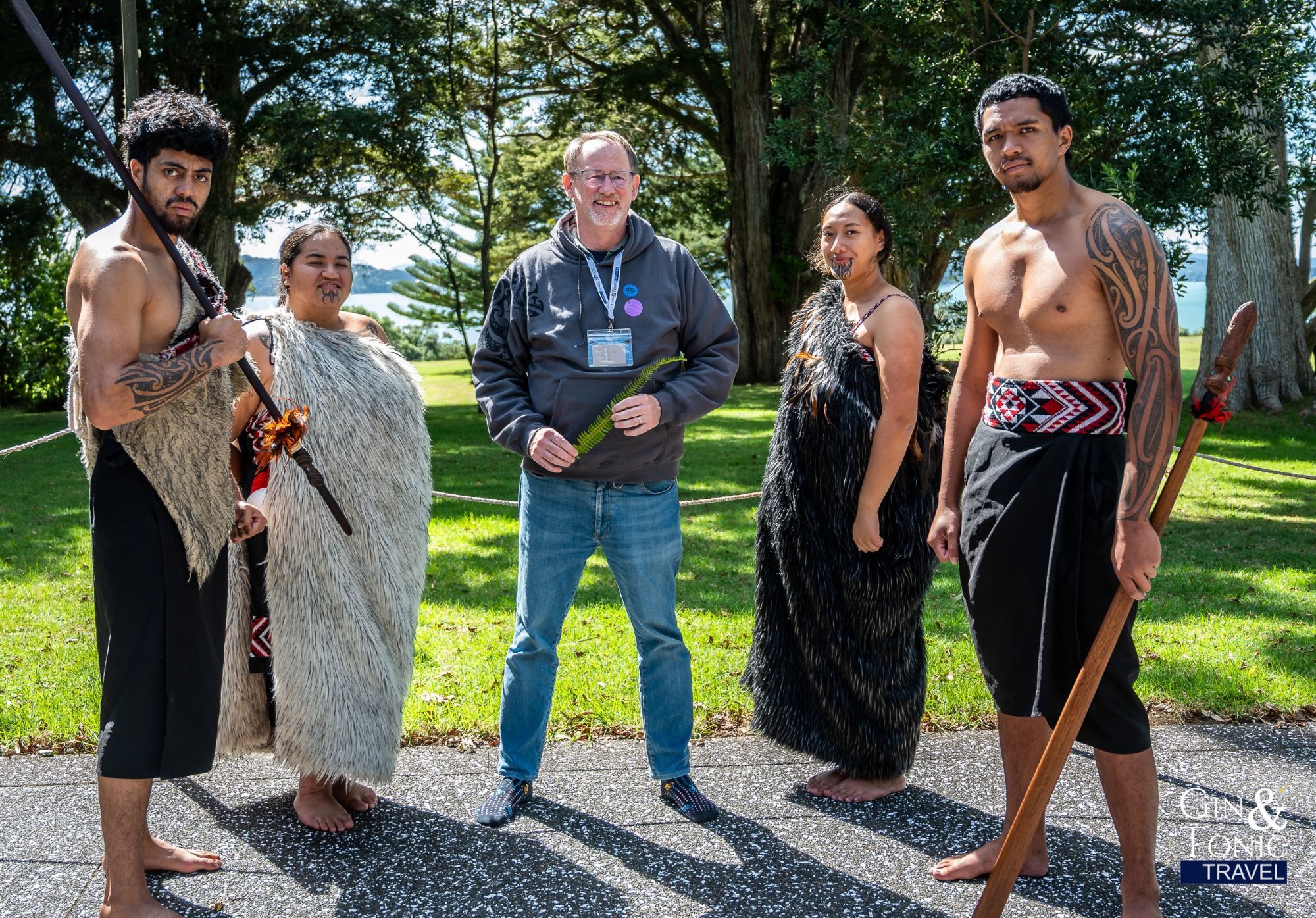
There were 150 cruise passengers standing at the edge of Māori land, and someone had to step forward. The group needed a chief — a representative to meet the Māori elder at the threshold of the Waitangi Treaty Grounds, to be assessed, to hold their ground, and to determine whether the newcomers were worthy of welcome. Marc Geuzinge, one of the tallest in the group and, by his own cheerful admission, not the shy type, raised his hand. "I'm also not shy, so I volunteered," he says, adding with a grin, "I was later told that I would have been picked anyway."
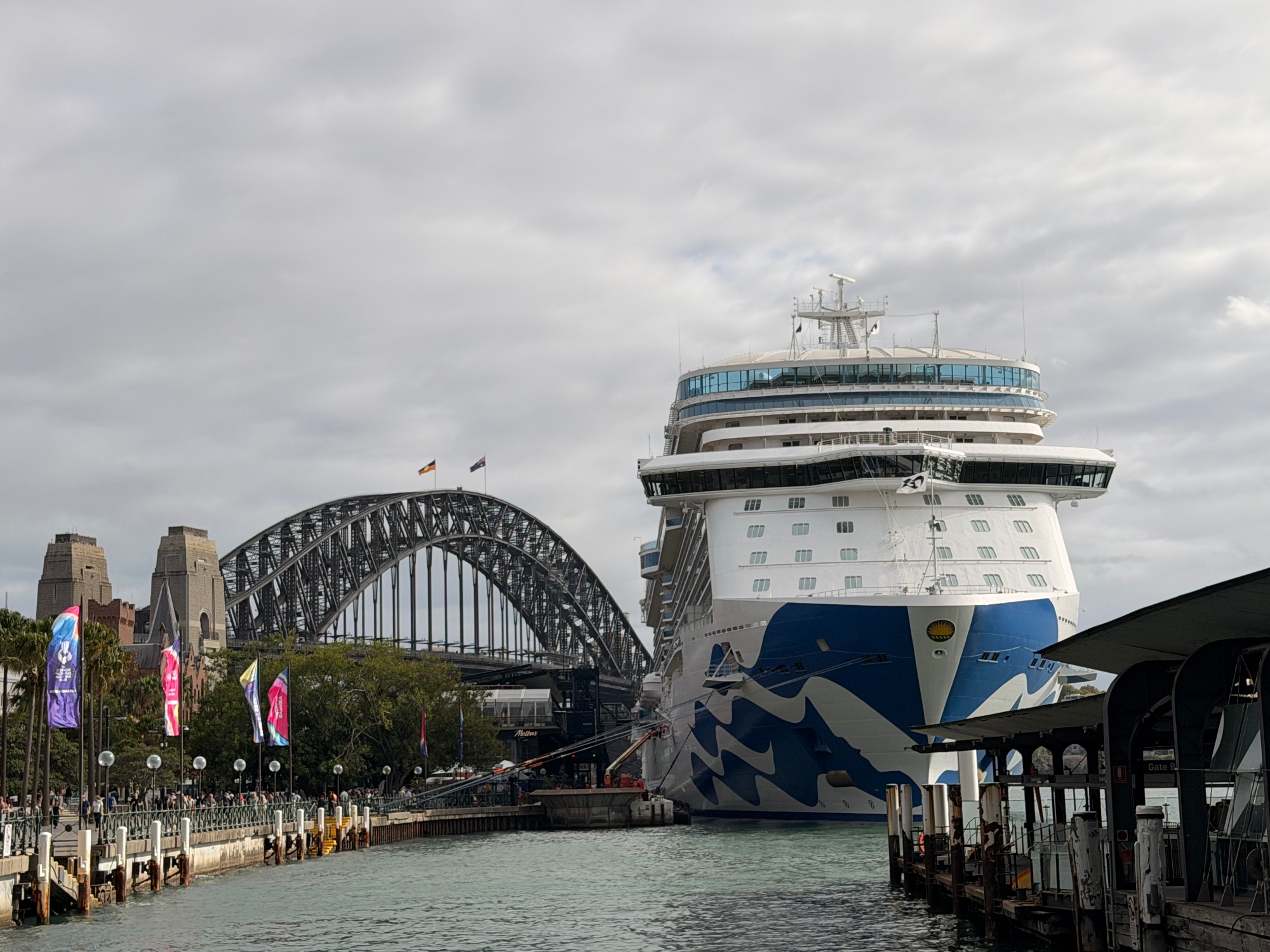
Geuzinge was aboard the Celebrity Edge, sailing a cruise itinerary from Australia to New Zealand, when the ship docked at the Bay of Islands. The stop brought his group to the Waitangi Treaty Grounds, a site of profound national and indigenous significance — the place where, in 1840, the Treaty of Waitangi was signed between the British Crown and Māori chiefs. What awaited them there was not a museum exhibit or a cultural performance staged for tourists. It was a pōwhiri, a traditional Māori welcoming ceremony, conducted with full ceremony and genuine weight.
The Silver Fern and the Unbroken Gaze
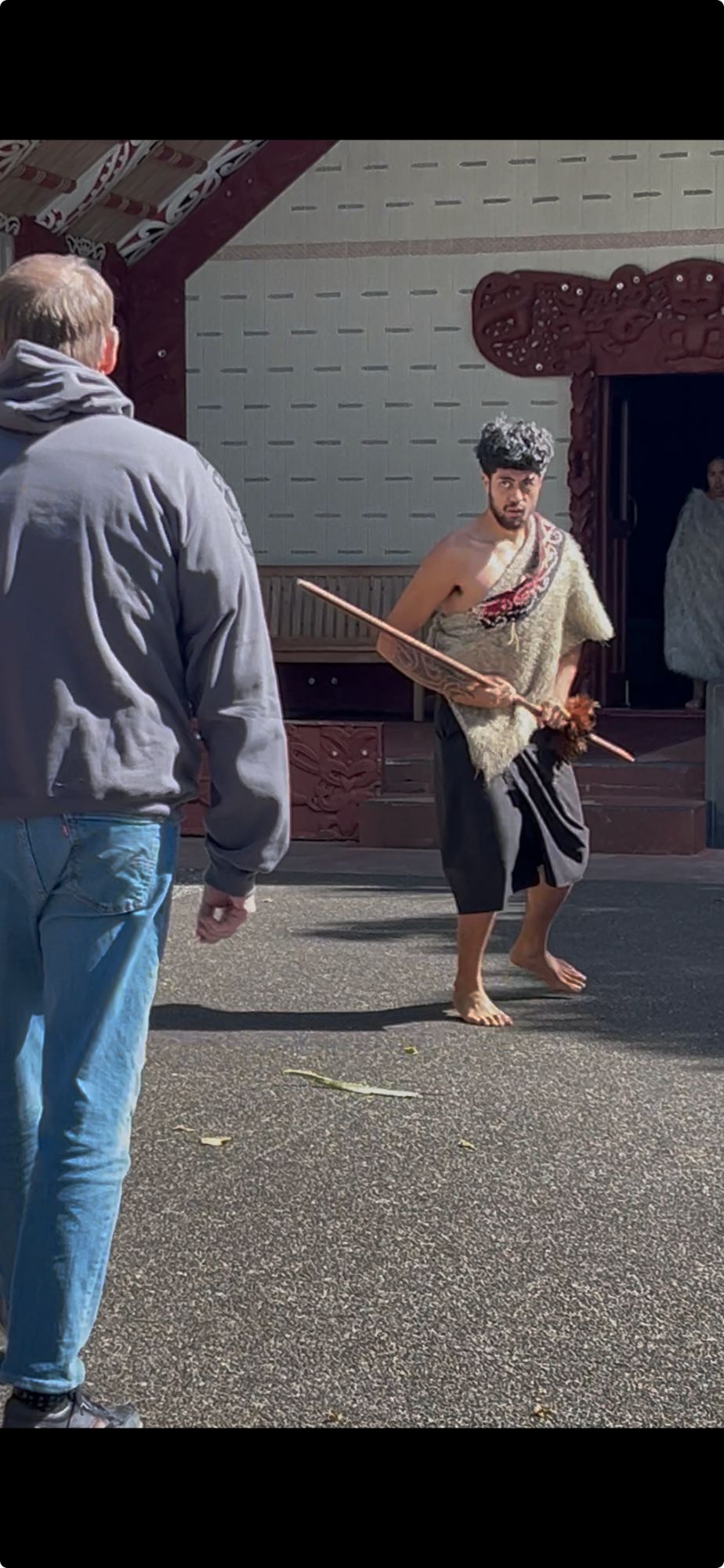
The ceremony unfolded at Te Whare Rūnanga, the intricately carved meeting house on the Waitangi Treaty Grounds. As Geuzinge and the group moved onto Māori lands, the protocol was clear: the chiefs of two peoples must first meet, read one another, and establish trust before any welcome could be extended. The Māori chief approached with loud gestures and a commanding physical presence, demonstrating authority without aggression — powerful enough to command respect, controlled enough not to inspire fear.
Then came the moment that stopped everything. "The chief then lays a silver fern leaf on the ground and retreats a few steps, while keeping a stern gaze locked on you," Geuzinge recounts. "You are not to flinch — and must maintain eye contact so that the Māori chief also knows that you are to be respected and can be trusted." The fern leaf, resting on the ground between two men who had never met, carried centuries of meaning. To pick it up was to accept the invitation. To look away was to fail the test. Geuzinge held the gaze, reached down, and lifted the leaf.
With that act, the group was welcomed. Inside Te Whare Rūnanga, special seats had been reserved at the front for the two chiefs and their personal entourage — Geuzinge among them, seated where he could absorb every detail of the ceremony that followed. "What stood out most," he says, "was the seriousness with which this ceremony is taken." This was not theatre. It was living tradition, conducted with the same gravity it has carried for generations.
A Culture That Is Very Much Alive
What shifted something deeper for Geuzinge was not the ceremony alone, but the people performing it. He had not anticipated what he found: young Māori men and women, full of vitality, carrying their heritage with fierce and joyful intention. "What surprised me was the youthfulness of my Māori counterparts and their almost boundless energy," he says. "They took their heritage and traditions seriously, clearly defining the importance of keeping their culture alive and well in the 21st century."
That spirit, he notes, reflects something broader happening across New Zealand. The country as a whole has shifted in its relationship with Māori culture. The language, the land, the history — these are no longer footnotes. They are woven into the national identity with a respect and prominence that struck Geuzinge as both meaningful and moving. The reemergence of indigenous culture, and its acceptance as central rather than peripheral to New Zealand's story, was something he had not fully expected to encounter. It became one of the lasting impressions he carried home.
A Glimpse Is Not Enough
Geuzinge is honest about what a cruise can and cannot offer. Docking at the Bay of Islands, walking the Waitangi Treaty Grounds, standing eye to eye with a Māori chief — these are extraordinary experiences. But they are also, by nature, brief. New Zealand opened a door, and he is already planning to walk through it properly. "New Zealand is now a place that we must go back to and explore with a land tour," he says, "so that we can stay in a few places, like Waitangi, for deeper immersion."
The list forming in his mind is not a checklist — it reads more like a calling. Fiordland National Park, with its cathedral-scale landscapes. Picton, the gateway to the Marlborough Sounds. The Southern Alps, dramatic and ancient. Wellington and Auckland, cities that reward the traveller who lingers. New Zealand, Geuzinge is clear, is a destination to be savoured. "It's not for people in a hurry," he says, "or for those who don't want to travel for more than 24 hours to get there from North America, because that is what it takes on average." The journey demands commitment — and returns it generously.
What Every Traveller Should Know Before They Go
For those who do make the trip, Geuzinge offers the kind of practical counsel that only comes from having stood in the places he describes. New Zealand is safe and navigable independently — "the people are kind and helpful" — but certain experiences require advance planning that many travellers underestimate. Hobbiton, the beloved film set in the Waikato region, sells out fast. The Sky Tower in Auckland rewards those with reservations. Organised tours, he notes, solve much of this friction by design. The broader lesson, one he applies to every destination he works with, is the same: "Be prepared. Have your ducks in a row before you go. Paperwork, visas, attraction tickets, hotel reservations and transits are best arranged beforehand for hassle-free travel. This is where your travel advisor comes in."
It is a principle Geuzinge lives as much as he advises. He did not simply observe the Waitangi ceremony from a comfortable distance. He was chosen, stepped forward, held eye contact across a stretch of sacred ground, and lifted the silver fern leaf. That is not the experience of someone who has read a destination brief. It is the experience of someone who has earned the right to say they know the place. "Having been to New Zealand myself," he reflects, "allows me to explain wonderful experiences like this one. Nothing beats a personal experience when it comes to something as immersive as this."
Next on the horizon for Geuzinge is a European river cruise — new waters, new stories to carry back to his clients. But New Zealand, with its carved meeting houses and its unbroken gazes, its boundless young culture-keepers and its landscapes that demand return visits, is already pulling him back. The land tour is not a vague aspiration. It is a plan taking shape, guided by the knowledge that some places do not let you go after a single meeting. New Zealand, it turns out, is one of them.