A travel advisor who grew up in the Canadian Arctic thought she knew what to expect from Greenland — but the island had other plans.
At a Glance
Greenland offers pristine Arctic wilderness, dramatic fjords filled with icebergs, and world-class museums like the Greenland National Museum housing fifteenth-century Inuit mummies. The destination suits outdoor enthusiasts, wildlife photographers, and culture seekers seeking alternatives to overtouristed locations, though visitors need sturdy footwear, layered clothing, and cash for remote communities.
There is a particular kind of travel professional who doesn't wait until they're home to start telling the story. Theresa Bobrowsky is that kind of professional. "I am so excited and thrilled about my experience in Greenland that I could not actually wait until I got home to start talking about it," she says, and the energy behind those words is entirely believable. Bobrowsky, a Victoria-based travel advisor, joined her husband on an ocean voyage — he was there to speak, she was there to research — and what began as a professional detour turned into one of the most personally resonant trips of her career.
The itinerary originated in New York City before heading north, but for Bobrowsky, the real journey began the moment the ship reached Greenland's shores. It is a destination she had long been drawn to, and the reason runs deeper than professional curiosity. "As a young child I lived in the Canadian Arctic for a period of time, so the time in Greenland opened up memories from childhood," she recalls. "Many things felt familiar but with a touch of Europe — Denmark to be specific." That layering of the known and the unexpected, of Arctic familiarity dressed in Scandinavian detail, would set the tone for everything that followed.
A Laugh Across the Language Barrier
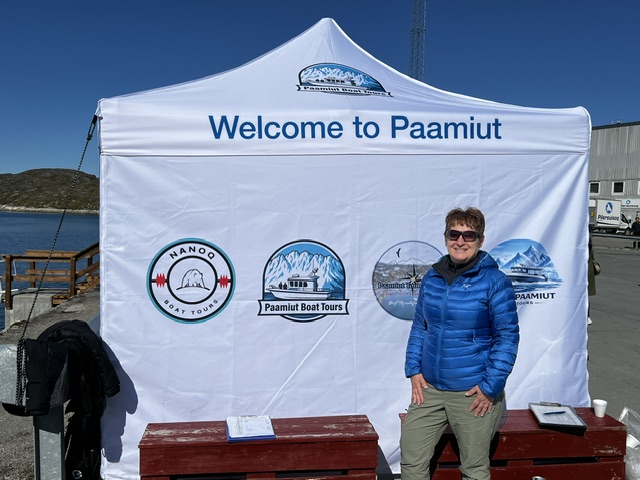
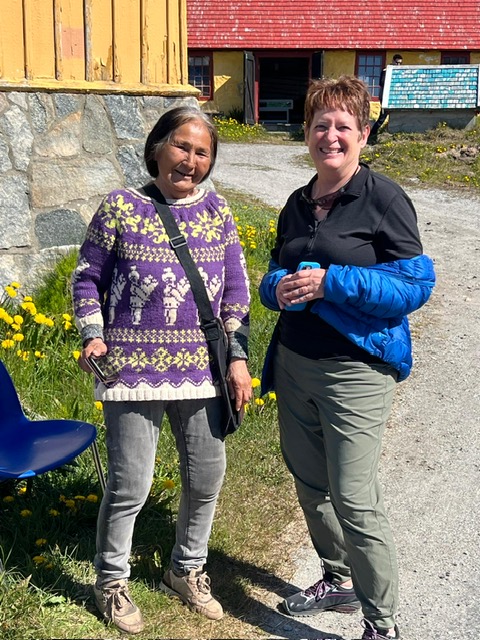
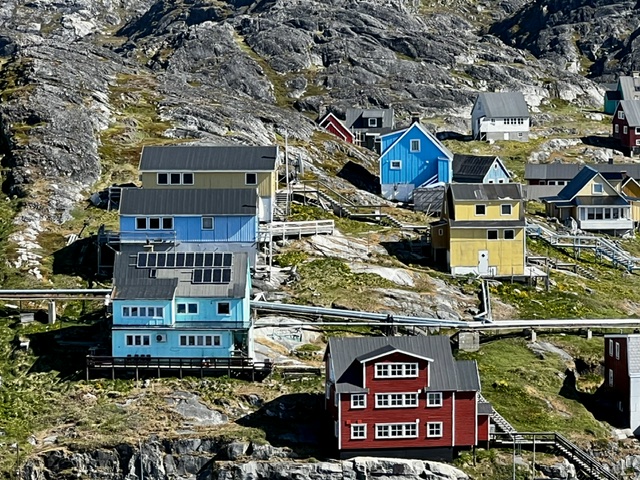
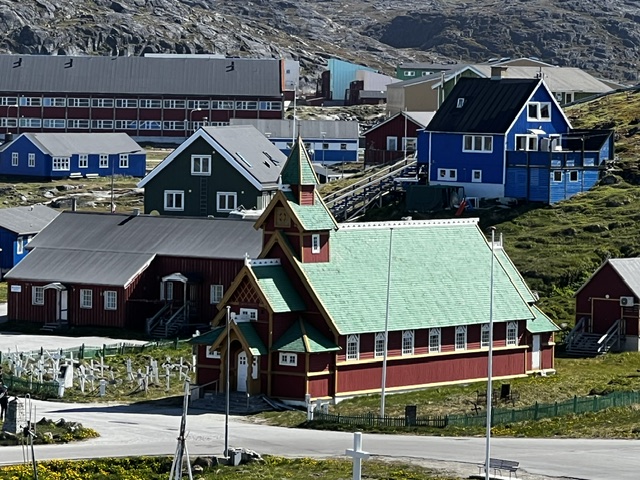
The ship's first Greenlandic stop was Paamiut, a community of roughly 1,000 people perched against terrain that is nothing short of rugged. It was here that Bobrowsky had one of the trip's most quietly profound moments. She struck up a conversation with a local woman and, despite the best efforts of both parties, communication proved elusive. "While we laughed a lot, I'm not sure we understood a single thing each other said," she says warmly. The laughter, it turns out, was the point. For Bobrowsky, that exchange captured something essential about Paamiut and, by extension, about Greenland itself. The warmth of the people, the openness of the culture, and the sheer tenacity of a community thriving in conditions that most travellers would find formidable — all of it crystallized in that laughing, wordless conversation on a Paamiut street.
Jawdropping: The Nuuk Fjord and What Lives in It
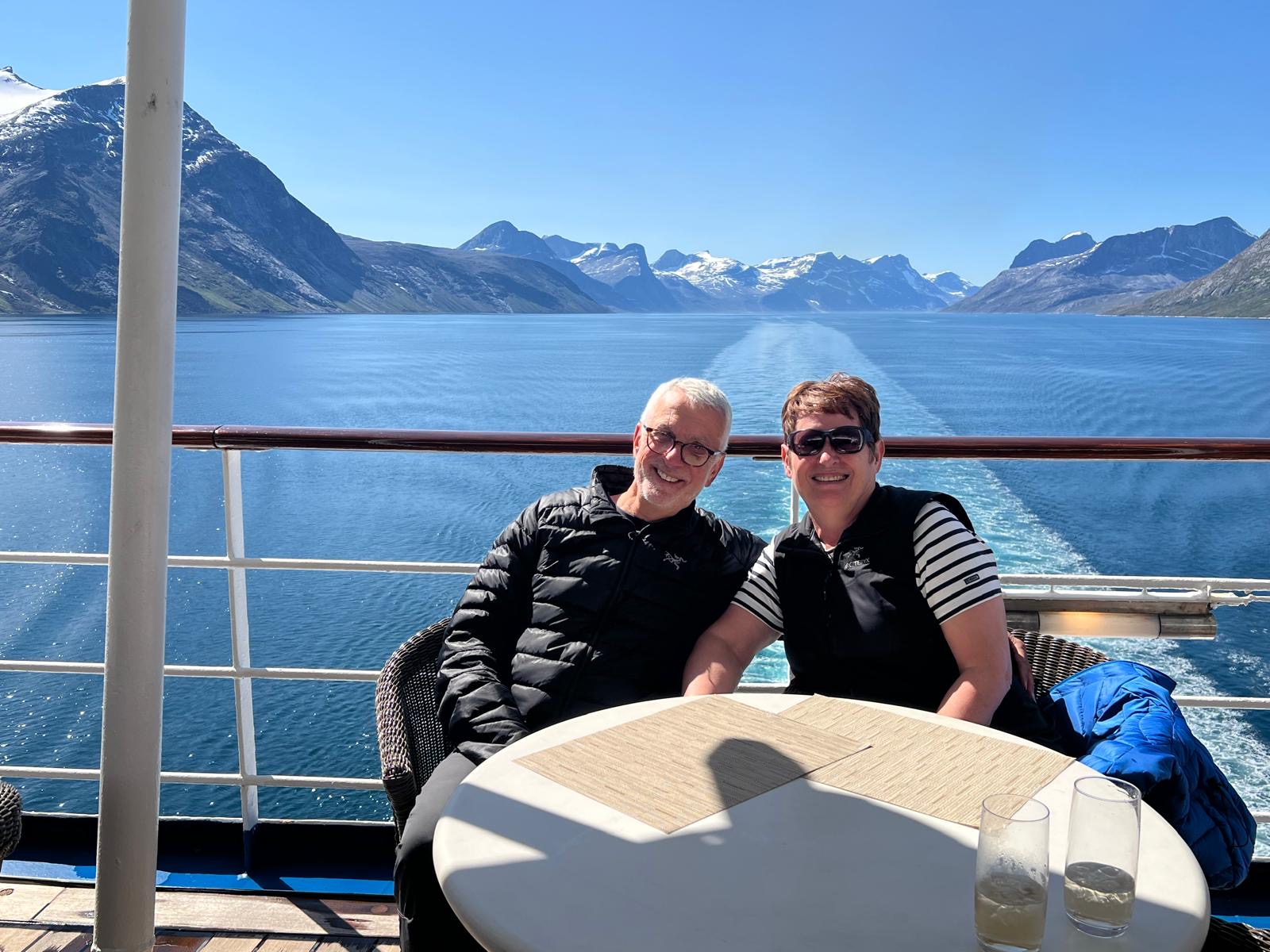
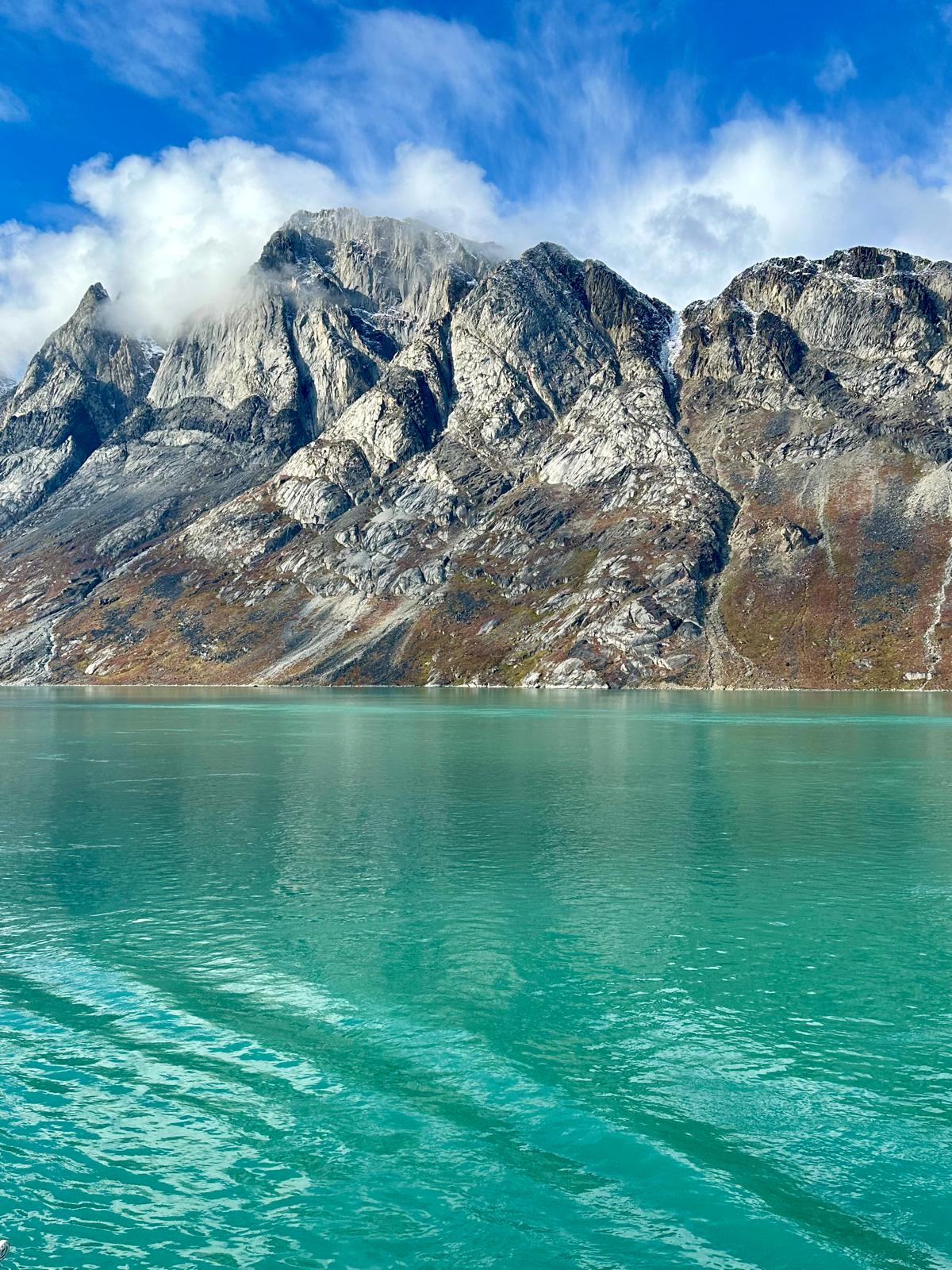
From Paamiut, the voyage continued toward Nuuk, the capital, but the approach was the revelation. A full day of cruising through the Nuuk Fjord left Bobrowsky reaching for superlatives. "One word — jawdropping," she says without hesitation. "Somehow in my journey to Greenland I overlooked that this country has the second largest ice sheet to the Antarctica. Icebergs, growlers and bergy bits were everywhere. There was also an abundance of Minke whales the day we were in the fjord." The precision of that language — growlers, bergy bits — is not accidental. Bobrowsky had done her homework, and what she found exceeded even the studied version of the destination she had prepared for.
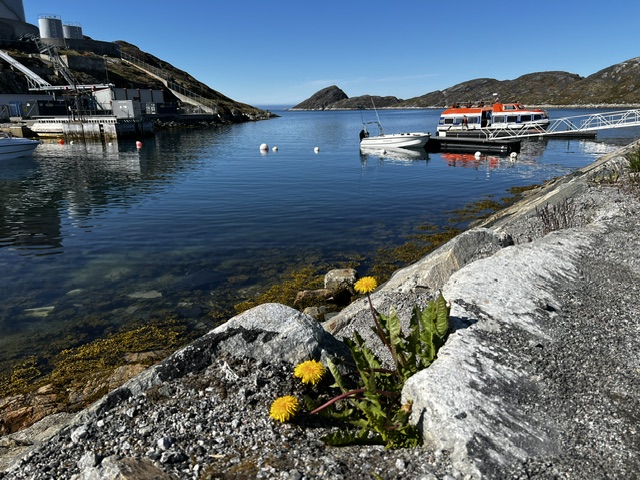
Nuuk itself arrived as another layer of surprise. With a population of more than 25,000, it is a city in motion, a construction boom already underway in anticipation of 10,000 additional residents in the years ahead. The old town offers wooden buildings from another era alongside art galleries and a meat market that draws locals daily. The newer architecture is clean and Scandinavian in its lines. One unexpected detail stopped Bobrowsky in her tracks: the region's Viking settlers are referred to locally not as warriors or explorers, but as farmers, because they arrived with livestock in tow. "This is not the picture I have in my mind about Vikings," she says, laughing at the gap between myth and reality.
The food proved equally disarming. At Café Esmerelda, part of the Happy Chicken Project, now rebranded as Sødam, Bobrowsky discovered that the emblem carries genuine meaning: organic sourcing, ethically managed meat from small Danish farms. The quality, she notes, was simply good. A visit to one of Nuuk's larger grocery stores added yet another layer. "The one larger grocery store was easily nicer than some that I use in Victoria, BC, with a very diverse range of products," she says. For a destination that imports much of its stock from Europe, the standard was quietly impressive.
The Museum That Packs a Punch
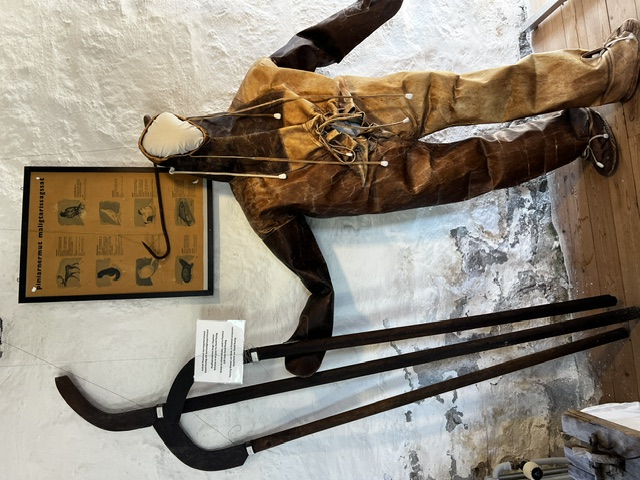
If the fjord was the visual peak of the trip, the Greenland National Museum and Archive in Nuuk was its emotional and intellectual summit. Bobrowsky does not reach for measured language when she describes it. "What really blew me out of the water is the Greenland National Museum and Archive," she says. "I don't know who the curator was but this small museum packs a punch. The curation is top-notch. The artifacts are stunning and the history that explores UNESCO designated intangible cultures is incredible." The museum also houses four of the eight Qilakitsoq Mummies, a discovery Bobrowsky had been primed for by a shipboard lecture but which still landed with full force when she stood before them. For any traveller with even a passing interest in human history and culture, she is unequivocal: this museum is a non-negotiable stop.
Greenland's cultural storytelling, she found, extends well beyond any single building. It is embedded in the fabric of everyday life: murals of animals painted across school facades, community art speaking directly to Inuit heritage, four-wheelers parked outside businesses as casually as snowmobiles outside a small-town Quebec café in winter. A sign inside the Nuuk Centre prohibiting ice cleats offered a moment of gentle humour, but it also spoke to something real. This is a place that knows exactly what it is and makes no apology for it.
The voyage's final Greenlandic gesture came as the ship's captain navigated up into Prince Christian Fjord at the country's southern tip. Bobrowsky sat with her husband over lunch, icebergs drifting past the windows, scenery so complete it almost defied description. It was, she says simply, breathtaking.
Who This Trip Is For — and Who Should Think Twice
As both a traveller and an advisor, Bobrowsky thinks carefully about fit. Greenland, she argues, is ideal for those who are actively moving away from overtouristed destinations, for avid outdoor enthusiasts, wildlife photographers hoping to spot polar bears, narwhal, muskox or wolf, and for anyone drawn to expedition cruising as a way of reaching places that are accessible by water alone. Culture-focused travellers will find the destination extraordinarily rich. Those who require opulence, guaranteed English-language service, flat walking terrain, or warm weather are likely to be disappointed.
Her practical tips are specific and hard-won: pack eye coverings for the midnight sun, layer clothing that wicks moisture, carry Danish Kroner and some USD for galleries, bring toiletries and a basic first-aid kit from home, invest in an international power adapter, and wear sturdy footwear. There are no sidewalks. The roads are uneven. The drivers, she notes, are respectful of pedestrians. And when visiting smaller communities like Paamiut, carry cash, as local artisans often operate outside the card economy.
A Destination Whose Time Has Come
For Bobrowsky, this trip confirmed a pattern she is watching closely across her entire client base. Travellers are increasingly asking for something different, somewhere that has not yet been loved into sameness. "Think pristine nature — think Greenland," she says, and she means it as both a personal endorsement and a professional directive. She is already planning a presentation with one of her preferred expedition cruise partners to bring the destination to clients who may not have thought to ask for it yet. She is also planning her own return, this time on an expedition cruise that reaches the country's most remote and far-flung corners.
"This is a place to explore before too many people figure out just how fantastic it is," she says. For a travel advisor who grew up near the Arctic, who has seen the parallels and felt the pull, who laughed with a stranger in Paamiut and stood in quiet awe before 500-year-old mummies in Nuuk, that recommendation carries the full weight of someone who has genuinely been there. Bobrowsky is not done with Greenland. By every indication, Greenland is not done with her either.