
When travel advisor Michelle Gagne Dube boarded a flight to Egypt with family and friends, she expected ancient wonders — what she didn't expect was that a city of 25 million people would feel like the warmest place on earth.
At a Glance
Egypt, particularly Cairo, defies its reputation for being overwhelming. Despite housing 25 million people, locals are remarkably kind and welcoming to visitors. English is widely spoken, making communication effortless, and the genuine warmth of individual interactions contrasts sharply with the city's massive scale, creating an unexpectedly intimate travel experience.
Most people who dream of Egypt picture the same things: the pyramids rising from golden sand, the Nile cutting through a timeless landscape, the weight of five thousand years pressing down on every cobblestone. It is a destination that inspires awe and, just as often, a quiet hesitation. Is it safe? Will I be able to communicate? Will a city that enormous feel navigable, let alone welcoming? For travel advisor Michelle Gagne Dube, those questions dissolved the moment she arrived. And what she found on the other side changed everything she thought she knew about one of the world's most iconic destinations.
Dube travelled to Egypt through Exotica, accompanied by family and friends, and she does not hesitate when asked to place it in the context of her life as a seasoned travel professional. "One of my most memorable vacations was going to Egypt with Exotica with family and friends," she says, with the kind of directness that only comes from genuine experience. For an advisor who has seen a great deal of the world, that is not a small thing to say. It is, in fact, the most powerful endorsement a destination can receive.
A City That Defies Its Own Scale
Cairo is, by almost any measure, a staggering place. Home to roughly 25 million people, it is one of the most densely populated cities on the planet, a sprawling, breathing, thunderously alive metropolis that has grown up around monuments older than most civilisations. For first-time visitors, the sheer scale of it can feel like a wall. The noise, the movement, the sense that everything is happening everywhere all at once. It is precisely the kind of place that lives up to its reputation for being overwhelming — or so the assumption goes.
Dube's experience told a very different story. What struck her most was not the grandeur of the ancient sites, extraordinary as they surely were. It was the people. "What surprised me the most is how wonderful and lovely the locals were," she recalls, "even though that was a huge population, just Cairo alone at 25 million. Everybody was kind." The contrast between those two facts, the incomprehensible scale of the city and the intimacy of every individual interaction within it, is the kind of detail that never makes it into a brochure. It is the kind of thing you can only know by going.
The Language Barrier That Wasn't
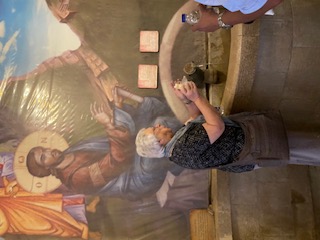
One of the most persistent concerns among travellers considering Egypt is the question of language. It is a barrier that, in the imagination, can feel insurmountable. Arabic script is visually unfamiliar to Western eyes, and the assumption that communication will be difficult is enough to nudge some travellers toward more immediately accessible destinations. Dube is well placed to dismantle that particular worry.
"They all spoke English," she says, with a note of pleasant surprise still evident in the telling. "Easy to communicate with them, and the service was wonderful." For clients sitting across from an advisor, wondering whether they could really manage a trip to Cairo, that sentence carries enormous weight. It is not reassurance drawn from a guidebook or a destination-marketing campaign. It is the testimony of someone who was there, who navigated the streets and the souks and the conversations, and who came home with a story about ease rather than difficulty.
The decision to travel with Exotica is itself a signal worth noting. Choosing a specialist operator for a destination as layered and complex as Egypt reflects the kind of product knowledge that only comes from genuine engagement with the travel industry. Dube did not simply book a flight and hope for the best. She made a considered, informed choice about who she trusted to shape that experience, and then she brought the people she loves most along for the journey.
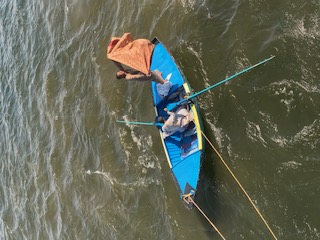
When the Advisor Becomes the Traveller
There is a particular kind of credibility that comes from a travel advisor who has not merely researched a destination but lived it. Who has eaten the food, navigated the streets, felt the afternoon heat, and looked a local in the eye. That credibility is not something that can be manufactured or approximated. It either exists or it doesn't, and in Dube's case, it exists in abundance.
When she chose Egypt for a trip with family and friends, rather than a solo reconnaissance or a professional fam trip, she made a statement about her confidence in the destination. This was not a test run. It was a holiday, taken with the people whose experience mattered most to her. That fact alone speaks louder than any amount of professional endorsement.
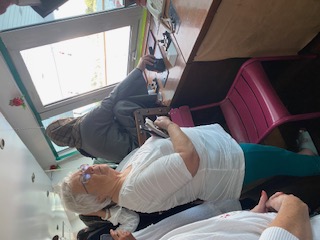
The Egypt that Dube describes is not the Egypt of anxious headlines or cautious travel advisories. It is a place of unexpected warmth, of effortless communication, of service that left a lasting impression. It is a destination that rewards curiosity and confounds assumptions, a place where the monuments are magnificent but the memory that lingers is the kindness of a stranger in a city of 25 million.
A Destination That Stays With You
Travel advisors often talk about the destinations that change them, the places that quietly rearrange their understanding of the world and of the people in it. Egypt, for Dube, is clearly one of those places. It entered her professional life as a destination she knew, and it left as something more personal, a country she had shared with the people she loves, an experience anchored not in itineraries but in human connection.
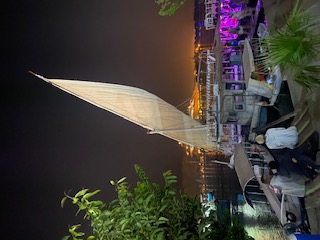
For anyone dreaming of Egypt and hesitating at the edge of that dream, Dube's story offers something more useful than a list of sights to see or tips on what to pack. It offers a firsthand account of arrival and surprise, of a city that felt, against all expectation, like somewhere you could belong. And for clients lucky enough to work with an advisor who has already made that journey, the path forward has never been clearer. Dube is already looking ahead, ready to bring the warmth and insight of her own Egyptian adventure to every client who dares to ask: should I go?