After a four-day Banff road trip that delivered jaw-dropping views and one costly logistical lesson, travel advisor Thilak Somasundaram returns with the kind of hard-won insight no guidebook can offer.
At a Glance
Banff's Lake Louise and Lake Moraine deliver turquoise waters and dramatic mountain vistas that justify their reputation, but optimal experience requires staying in Banff or near Lake Louise rather than commuting from Canmore. Winter visits with snow-capped peaks offer greater visual impact than summer, and advance parking strategies and ticket bookings eliminate peak-season frustration.
There are destinations that greet you with a postcard, and then there are destinations that reach into your chest and rearrange something. Banff, Alberta, is the latter. For travel advisor Thilak Somasundaram, the moment that confirmed this came somewhere between the edge of Lake Louise and the mirrored stillness of Lake Moraine, where the water runs a shade of turquoise that feels almost implausible. "The spectacular views of Lake Louise and Lake Moraine," he says, and even in recollection the awe is immediate, unfiltered, the kind that needs no embellishment.
Somasundaram recently completed a four-day Banff road trip with another family, based out of Canmore and working their way through some of the Canadian Rockies' most celebrated scenery. It was the kind of trip that delivers on its promises in the most vivid, sweeping terms. It was also the kind of trip that teaches a professional something they could not have learned from a brochure.
A Canvas of Mountains and Light
The Canadian Rockies do not ease you in. From the moment the mountain range appears on the horizon, the scale of it demands attention. For Somasundaram, the visual experience was the defining thread of the entire journey. The drive through the Bow Valley corridor, the glacier-fed lakes shifting colour with the light, the mountain peaks framing every vista. It was, as he puts it simply but precisely, "a visual beauty."
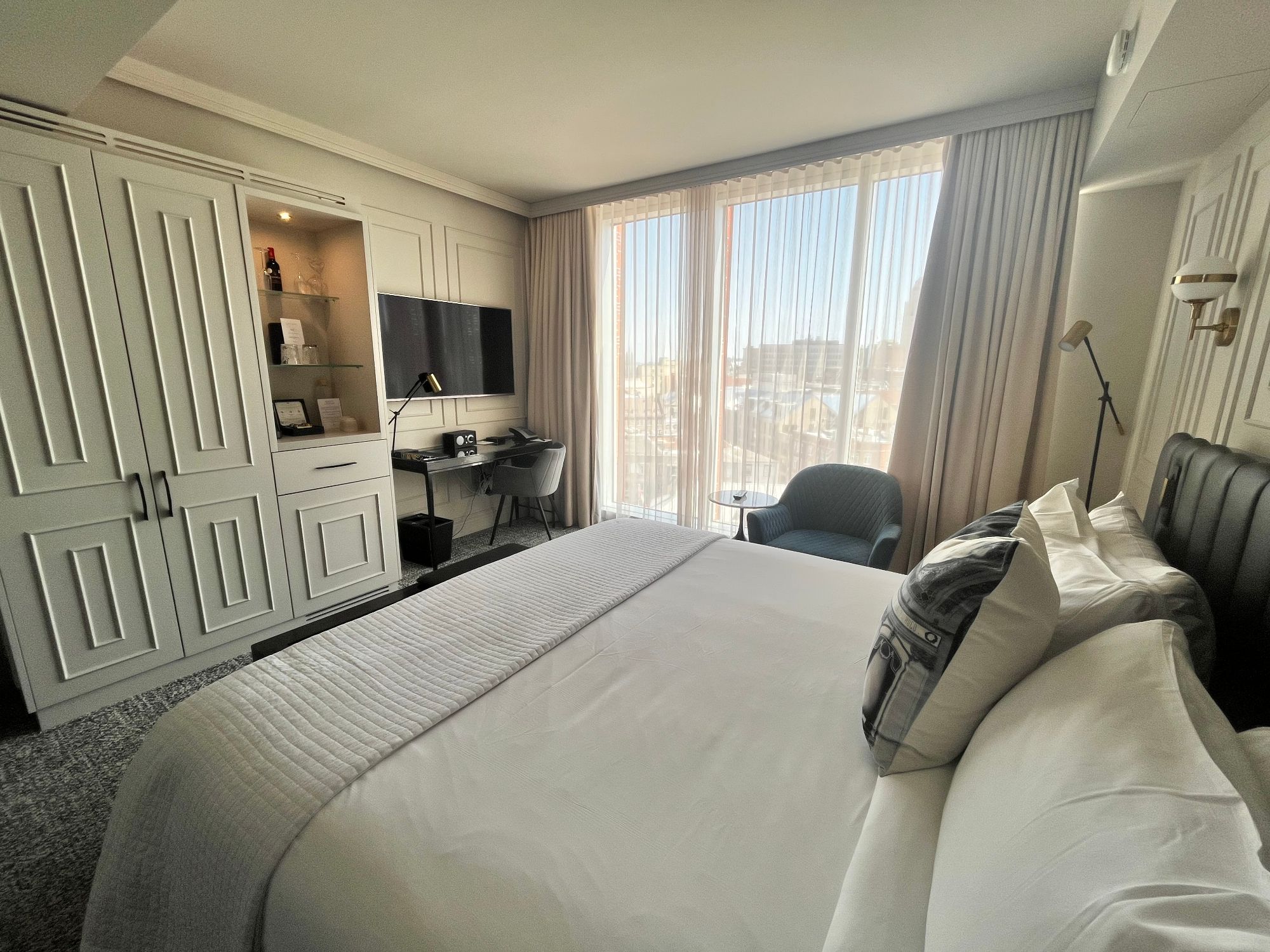
Evenings brought a different kind of spectacle. Staying at the Golden Ridge Collection, Somasundaram found himself watching the sun descend behind the peaks in a slow, burning procession of colour. He describes "the stunning sunset views while staying at Golden Ridge Collection" as one of the trip's most lasting impressions, the kind of quiet moment that resets the senses after a full day of movement and marvel. It is the sort of experience that clients dream about when they say they want to feel something on a holiday, and Somasundaram now knows exactly which property delivers it.
The Lesson Nobody Warned Him About
Here is where the story earns its credibility. Banff rewards those who plan carefully, and it gently punishes those who don't. Based in Canmore, Somasundaram and his travel companions made the daily drive to Lake Louise and the surrounding highlights, a commute that added up to roughly two hours each way. It was time spent in the car rather than on the lakeshore, and it is the detail he now volunteers immediately when the subject of Banff comes up.
"The drive from Canmore to Lake Louise," he reflects, noting that he "would have stayed in Banff or closer to Lake Louise so that I could have avoided the 2-hour travel every day." It is an honest admission, and a professionally generous one. The mistake was minor in the grand scheme of a beautiful trip, but for a travel advisor, minor inefficiencies in a client's itinerary are never truly minor. They are the moments that separate a good trip from a great one.
That single logistical insight will now directly shape how Somasundaram builds Banff itineraries. He plans to map route plans for clients to avoid unnecessary back-and-forth travel, a shift that might seem small on paper but translates to hours of recovered time in the mountains.
Why Winter Might Win
One of the more counter-intuitive takeaways from the trip is Somasundaram's view on seasonality. Most travelers default to summer for Banff, drawn by accessible roads and long days. Somasundaram experienced it in summer and came away with a nuanced read on the question. The drive was beautiful, the landscapes were green and dramatic, but something about the season felt like it was holding back the destination's full potential.
"It is best to see this place during winter or when the glaciers and mountains are snow-capped," he says. "In summer, the drive was visually appealing but visiting Banff in winter would be more visual treat." For clients who assume summer is always the safe choice, this is the kind of insight that only comes from someone who has stood in that landscape and felt the difference. It reframes the entire conversation around timing and gives travelers permission to consider the less obvious season.
Insider Knowledge Worth Having
Beyond accommodation placement and seasonal timing, Somasundaram returned with the kind of granular, practical intelligence that clients rarely discover on their own. Parking in Banff is genuinely limited, and the frustration of circling for a space in peak season is a familiar complaint among first-time visitors. His solution is direct: use the free parking at Banff train station and walk to downtown, or arrive after 8 PM when public parking spaces open up. He also recommends downloading the Blinkay parking app and setting it up before the trip begins, not in a car park with a queue behind you.
On the broader subject of planning, the lesson is equally clear. Book tickets ahead of time to secure the same experience at a lower cost, follow the planned itinerary, and resist the temptation of too many last-minute changes. In Banff, where popular sites fill quickly and logistics require precision, spontaneity has a price.
Who This Trip Is For
When asked who would love Banff most, Somasundaram does not narrow the field. "This place is good for all ages who love nature beauty," he says, and the trip itself bears that out. A multi-family road trip through some of the world's most photogenic mountain scenery is, by design, a broadly appealing proposition. The landscapes are accessible, the activities are scalable, and the visual reward is immediate regardless of how much hiking a traveler is willing to do.
What Somasundaram can now offer his clients is not just a destination recommendation but a fully considered framework. Trusted suppliers, a logical route map, a packing checklist tailored to the terrain, and the accommodation insight that changes the shape of the entire trip. He travelled so that his clients can arrive already knowing what took him four days to learn.
The Road Ahead
The Banff road trip has already refined how Somasundaram thinks about itinerary design, supplier relationships, and the quiet power of firsthand knowledge. But he is not dwelling on the rearview mirror for long. His next destination is Alaska, via cruise, and the same professional curiosity that made the Banff experience so instructive is already turning toward what that journey might reveal. For the clients who will eventually follow in his wake, that is a very good thing indeed.