Toronto-based travel advisor Nicholas Ruge returns from an extraordinary dual-destination journey that challenged his assumptions, deepened his expertise, and left him with stories his clients will never forget.
At a Glance
Saudi Arabia's AlUla combines ancient Nabataean heritage sites like Hegra with dramatic sandstone landscapes and eco-resort experiences. The region's intentional hospitality and cultural storytelling, paired with strategic tourism infrastructure, create transformative journeys for travelers seeking authentic, off-the-beaten-path destinations beyond mass tourism.
There are trips that entertain, and then there are trips that transform. For travel advisor Nicholas Ruge, a meticulously designed journey through the sandstone canyons of AlUla, Saudi Arabia, and the crystalline northern atolls of the Maldives fell firmly into the latter category. Equal parts heritage pilgrimage and tropical escape, the experience has reshaped not only how Ruge thinks about these two destinations, but how he listens to his clients and crafts the recommendations that define his practice.
Where Ancient Stone Meets a New Vision
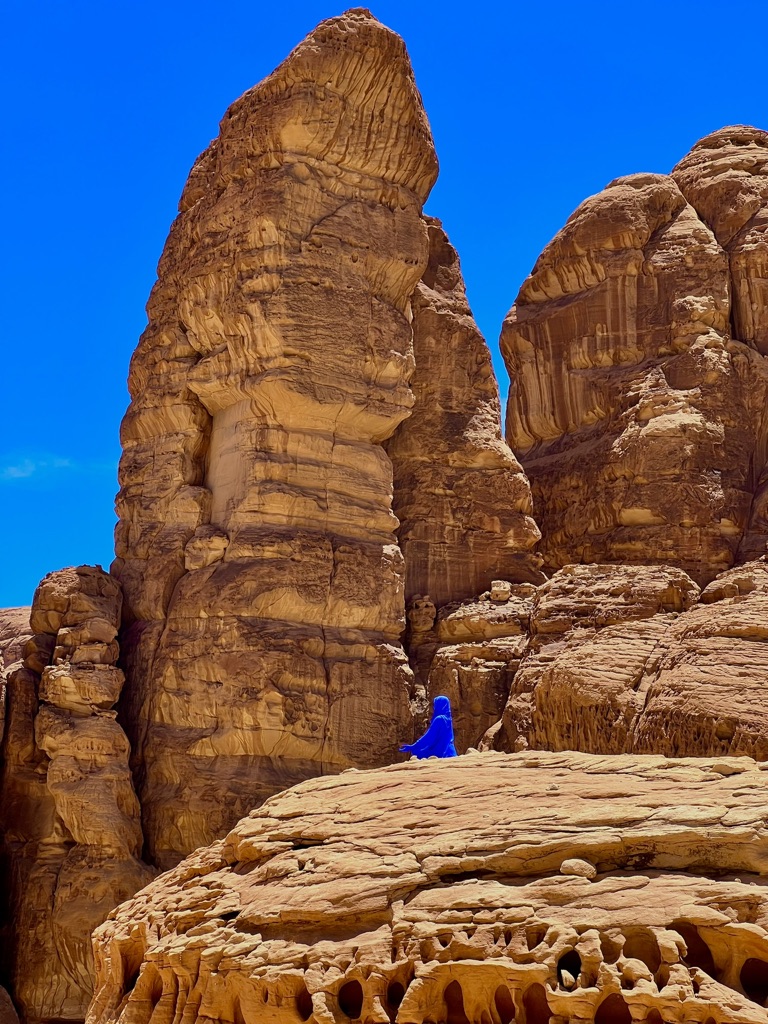
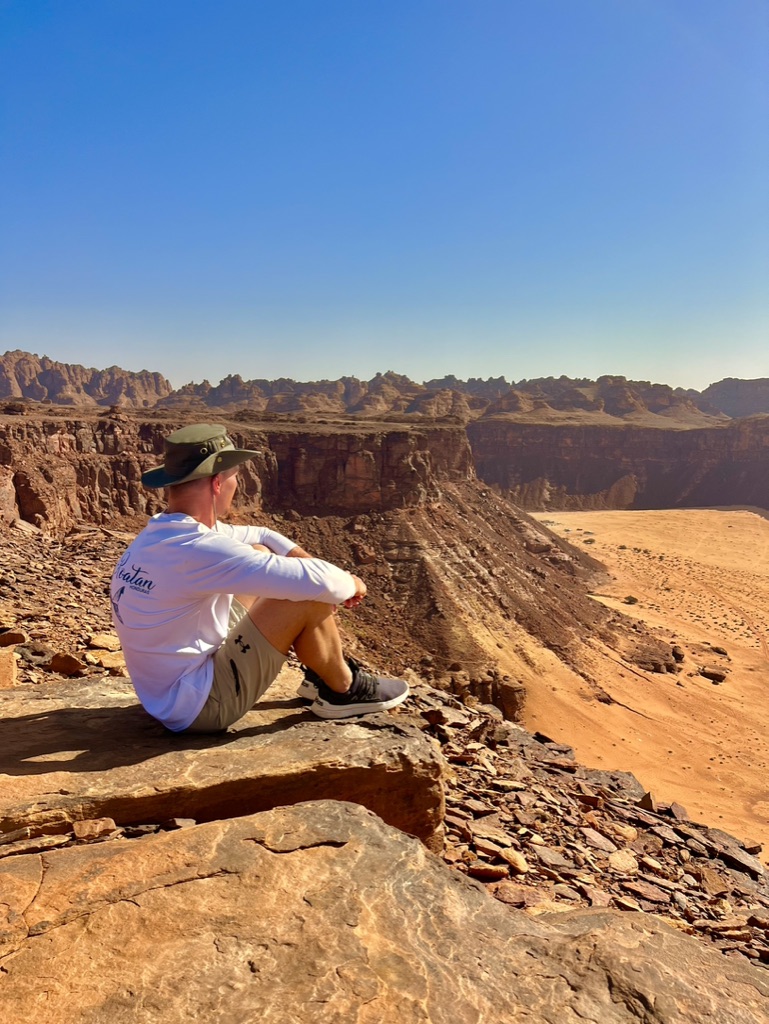
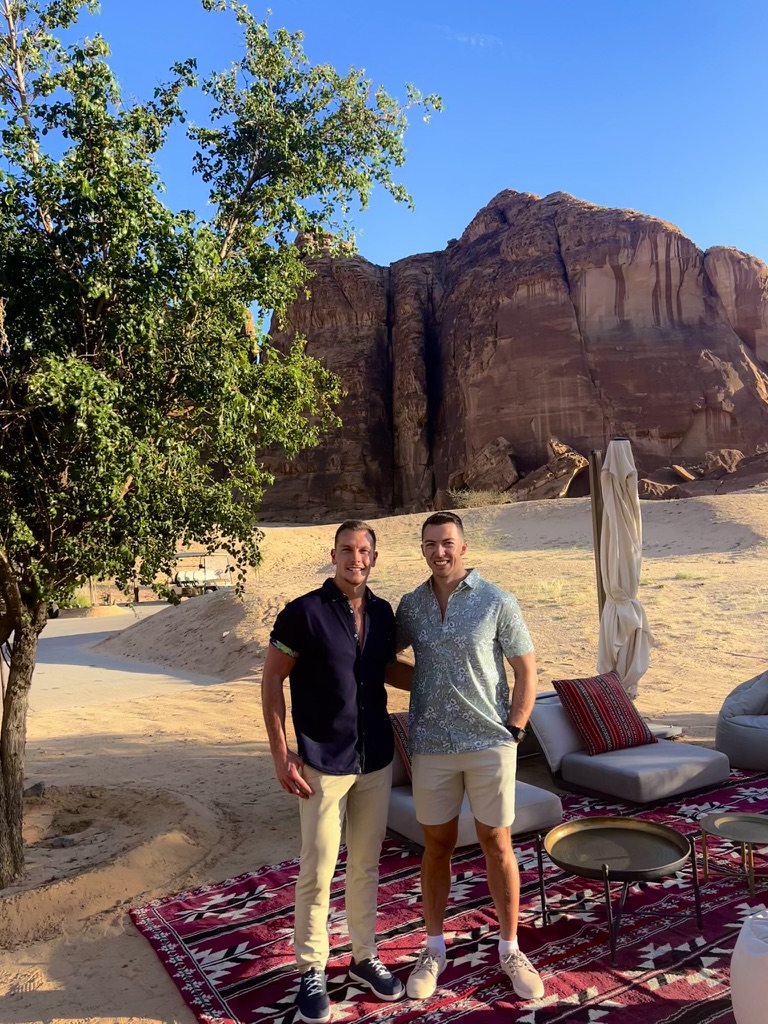
Ruge arrived at Habitas AlUla, the design-forward eco-resort nestled within the Ashar Valley, in May, stepping into a landscape that seemed to exist outside of time. The trip was booked in partnership with Emirates, Experience AlUla, and Habitas AlUla, three suppliers he engaged with deliberately to build lasting industry relationships. From the very first evening, the destination announced itself in cinematic terms. The group gathered beneath a blazing field of stars for a sound bath held within the slot canyons of the Ashar Valley, an experience that set the tone for everything that followed.
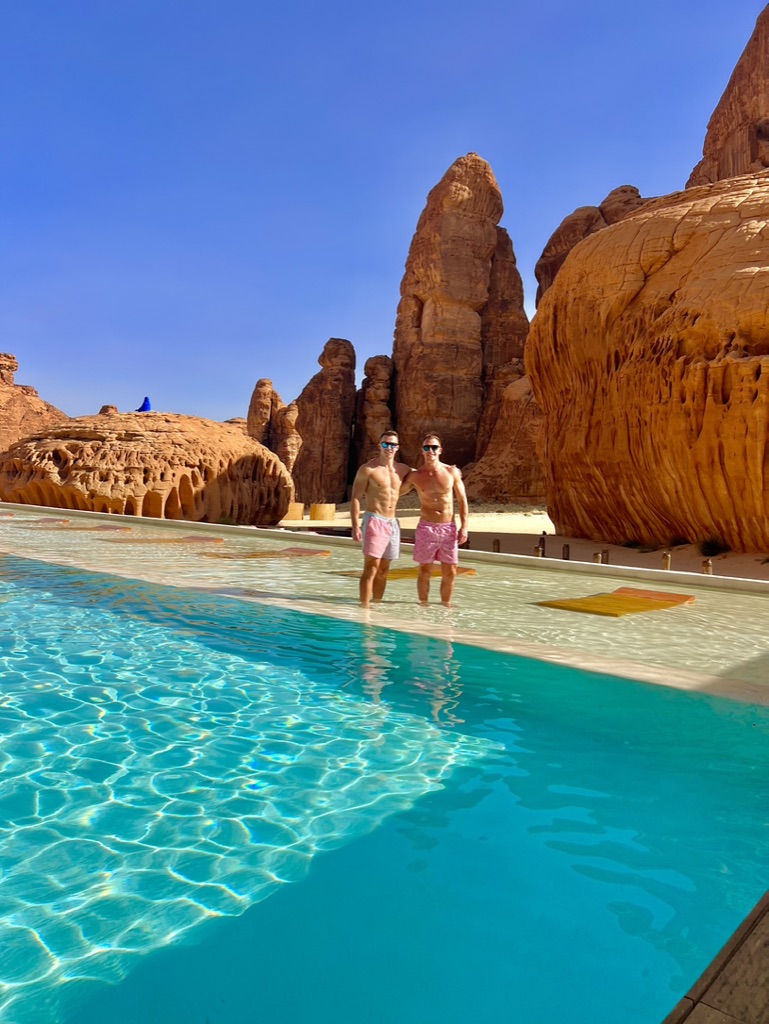
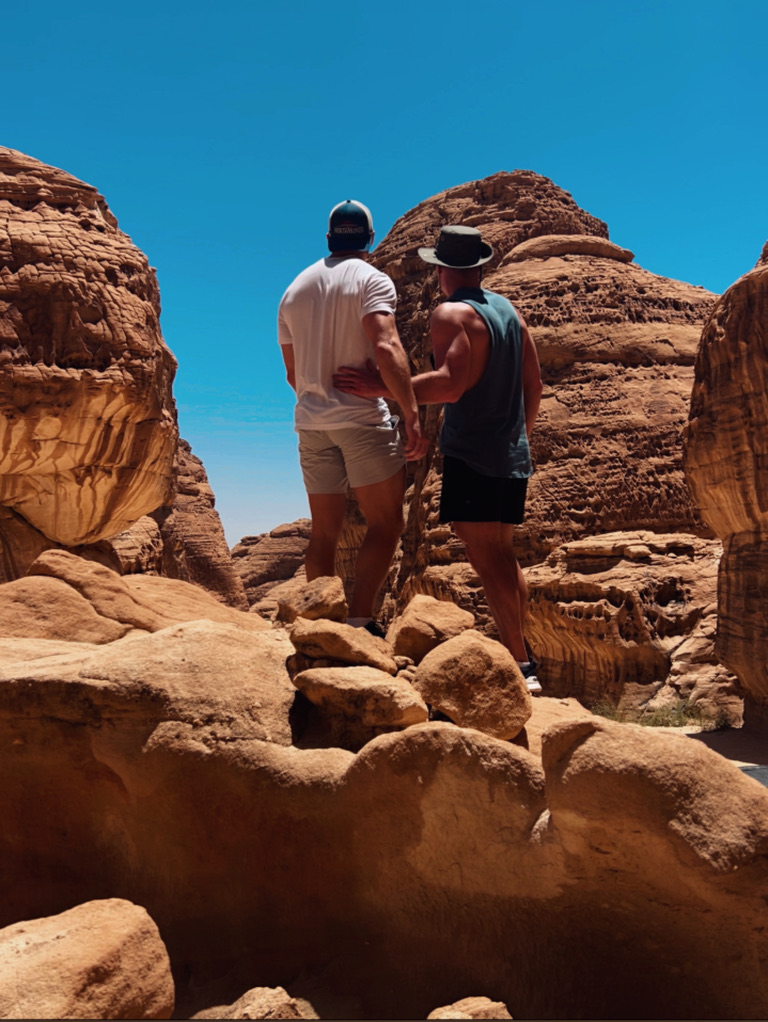
Day excursions took the group to Hegra, one of the region's most iconic heritage sites, where more than 100 Nabataean tombs have been carved directly into rust-coloured sandstone over millennia. They also visited Elephant Rock, a natural sculpture shaped by centuries of wind, dust, and erosion into the unmistakable silhouette of an elephant mid-stride. Ruge describes the landscape as nothing short of breathtaking, but it was something less tangible that left the deepest impression. "What struck me the most was the incredible hospitality and storytelling that exists within this region of AlUla," he says. "Not only were the team at Habitas incredibly warm and inviting, but they brought this sense of comfort and home with them that made the whole experience truly remarkable."
That warmth, Ruge explains, extended into the smallest gestures. Handwritten notes. Thoughtful conversations. Moments of unexpected connection across vast cultural distances. "We were able to find commonality and similarity in our worldview despite being from completely different parts of the world," he reflects, "and yet they created this warm, welcoming atmosphere that felt just like home through their incredible hospitality. That was truly a surprise."
From Desert Dunes to Island Horizons
From AlUla, Ruge and his group continued south to the Maldives, landing in the Fari Islands of the northern atolls for a seven-night stay split between two properties. The first four nights were spent at the Ritz-Carlton Maldives, Fari Islands, followed by three nights at the neighbouring Patina Maldives, accessible by a short speedboat ride. The contrast between desert and ocean, between carved stone and living coral, was by design, and it worked beautifully.
The arrival at the Ritz-Carlton set an immediate tone of ceremony and welcome. The resort team greeted the group dockside with the resonant call of a conch shell, ushering them into overwater villas that floated above water so clear it seemed almost impossible. Snorkelling and scuba diving revealed a thriving ecosystem of tropical fish and coral reef. Sunsets arrived in layers of colour. It was, by any measure, the Maldives at its most iconic.
Yet Ruge came away with a deeper appreciation for the islands that extends well beyond the postcard imagery. He was struck by the intentionality with which the Maldivian tourism industry has been built, specifically its commitment to employing local talent and weaving native customs into the guest experience. It gave him a framework for how to talk about the destination with clients in a more meaningful way, one grounded in the people and culture, not just the scenery.
The Intelligence Behind the Experience
For Ruge, the professional takeaways from this journey are as significant as the personal ones. Experiencing the infrastructure of AlUla firsthand, navigating airports, booking excursions, and understanding how the Saudi Tourism Authority has strategically managed visitor numbers, gave him tools he simply could not have acquired from a brochure. "Being able to experience it firsthand and how to navigate the different landscapes and airports and booking experiences has really given me the tools I need to be able to recommend and better walk my clients through it," he says.
The Maldives leg offered its own educational moment, one that arrived with less sunshine than expected. Travelling in May placed the group at the very start of monsoon season, and the resulting rough seas offered a live lesson in the realities of weather-dependent travel. Seaplane and speedboat operations were affected, and contingency planning became part of the experience. Rather than seeing this as a setback, Ruge views it as invaluable preparation. He now knows precisely how to guide clients toward calmer seasonal windows and how to set expectations honestly when flexibility is required.
The trip has also refined how he approaches the discovery process with new clients. Rather than leading with a destination, he now leads with questions. "Nine times out of ten, suppliers and tour operators will expect travelers to know where they want to go next," he notes, "but this is really the game changer. It taught me to qualify my clients first and understand what environments they thrive in the most, what piques their curiosity and interest, and then how do I match and line up the destination with that."
Who This Journey Is For
Not every traveller is suited to a trip like this, and Ruge is clear-eyed about that. The ideal candidate is someone drawn to authentic, off-the-beaten-path experiences in destinations that have not yet been saturated by mass tourism. They are curious about history and culture, drawn to wellness-centred environments, and open to the unexpected. They value connection over convenience. For travellers who prefer the predictability of well-worn paths, AlUla in particular may demand more adventurousness than they are ready to offer.
For those who are ready, however, the insider knowledge Ruge now carries is considerable. He recommends incorporating a complimentary stopover in Dubai when flying Emirates, a move that can reduce airfare costs by just over ten percent while adding a layer of adventure to the journey. He also counsels clients to be strategic about Maldives seasonality, steering clear of the May-to-October monsoon window where possible, and encourages guests in the Fari Islands to plan stays across both the Ritz-Carlton and Patina properties, which, as neighbouring resorts, offer a seamlessly varied experience within a single destination.
Stories Worth Telling
At its core, what Ruge brought home from Saudi Arabia and the Maldives is a philosophy as much as a collection of memories. "It all comes down to storytelling," he says. "What this trip has taught me is how to tell a compelling story about a destination that hasn't been really discovered yet by mainstream tourism. It's really important to keep forging and carving that path of travelling to more off-the-beaten-path destinations that require more legwork and planning to be able to put together those unforgettable and truly remarkable experiences."
That commitment to the path less travelled is already shaping what comes next. In November, Ruge heads to Vietnam for a twenty-day journey through the north of the country, from the streets of Hanoi to the limestone karsts of Ha Long Bay, the mountain villages of Sapa, the rivers of Da Nang, and finally the coastal waters of Ninh Van Bay. It is, in every sense, the next chapter of a practitioner who understands that the best way to serve a client is to keep exploring, keep questioning, and keep collecting the kinds of firsthand stories that no algorithm can replicate.