Selected by Virtuoso for an exclusive study tour, travel advisor Lindsey Ellis arrived in San Juan with assumptions about Puerto Rico and left with something far more valuable: the first-hand expertise to match any client to their perfect version of the island.
At a Glance
Puerto Rico extends far beyond beach tourism, offering a sophisticated culinary identity rooted in Boricua heritage. Old San Juan's food tours reveal achote spice, cacao history, and mofongo's generational refinement, while accommodation ranges from resort-style to historic immersion to ultraluxury, each serving different traveler profiles and activity preferences.
It started with an empanada.
Not just any empanada, but one eaten on a cobblestone street in Old San Juan, dusted with achote spice, served inside a restaurant where the walls carried centuries of rum heritage. Lindsey Ellis, a travel advisor selected by Virtuoso for their Discover Puerto Rico Study Tour in the first week of June 2026, had come to the island on a research trip. What she did not expect was to have her entire understanding of a destination rewritten, one meal at a time.
"The tourism board made sure to make us feel and taste the VIP treatment and Boricua flavor our clients will come to savor," Ellis recalls. It is a line that tells you everything about the caliber of access she was given, and about the standard of knowledge she now carries home to her clients.
A Culinary Tour That Changed Everything
The moment Ellis keeps returning to, the one she finds herself describing again and again, did not happen at a resort pool or on a white-sand beach. It happened on a guided walk through Old San Juan with Spoon, a locally operated tour company dedicated to showcasing Puerto Rico's culinary identity through the lens of its living history.
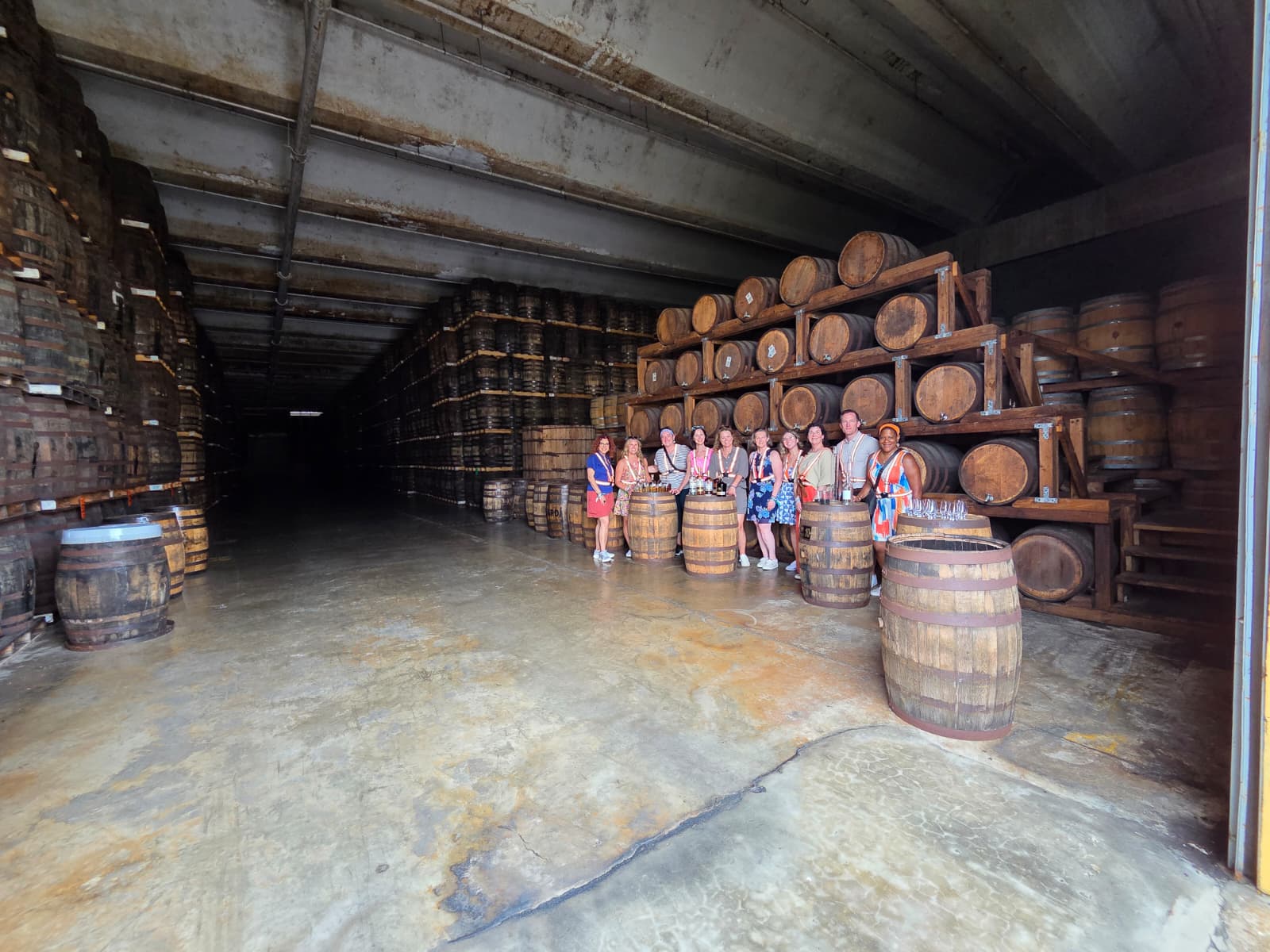
Their guide, Pablo, was the kind of storyteller who makes food feel like archaeology. At Juanes Restaurant, he walked the group through the island's rum heritage and introduced them to achote, the deep amber spice that threads its way through the DNA of Puerto Rican cooking, turning up in dish after dish, including the scrumptious empanadillas the table could not stop eating. At Chocobar Cortes, the story shifted to cacao, its production history unfolding over chocolate martinis that tasted as rich as the heritage behind them. At Cafe El Bosque, glasses of endemic fruit varietal juices arrived, flavors that exist nowhere else on earth. And at Rellena'o, the group discovered mofongo, a dish with the kind of depth that only comes from generations of refinement, served at a traditional food stall so beloved it had grown into a brick-and-mortar in the heart of town.
Ellis describes Pablo as someone who "displayed his wealth of knowledge and passion for Boricua food culture," and that passion, she says, was contagious. By the time the tour ended, something had shifted. "This small taste of Puerto Rico solidified this territory as a culinary destination and food lovers paradise." The certainty in that statement is not the polished language of a brochure. It is the conviction of someone who has tasted the evidence herself.
More Than Beaches: A Destination Rewritten
Ellis is candid about what she carried onto the plane before the trip. "Preconceived notions influenced my bias that Puerto Rico was only for the casual beach-goer searching for an island escape," she admits. It is the kind of honesty that takes confidence, and it is precisely the kind of insight that makes a great travel advisor.
Because while the beaches are real, and the island escape is real, Ellis found that they represent only one layer of a destination with extraordinary range. She came back with a mental map of Puerto Rico's accommodation landscape that spans three distinct worlds. There is the Fairmont El San Juan, a lively, resort-style property built for entertainment, nightlife, and beach access. There is Hotel El Convento, tucked into the historic heart of Old San Juan, offering a quiet, intimate, and culturally immersive stay for travelers who want to sleep inside history. And then there is the Dorado Beach Ritz Carlton Reserve, an ultraluxury oasis for the traveler whose idea of paradise involves impeccable service and serene seclusion.
Three hotels. Three entirely different Puerto Ricos. And Ellis has walked, eaten, and explored enough of each world to know which one belongs to which client.
Adventure, Rest, and Everything Between
Beyond the table and the hotel lobby, Ellis discovered that Puerto Rico's activity spectrum is just as wide. For the traveler who arrives wanting nothing more than to exhale, the island delivers with world-class beaches and spa facilities that rival anything in the Caribbean. For the traveler who needs to move, El Yunque National Forest offers hiking trails and the kind of waterfall rappelling that stays in your nervous system for weeks. For everyone in between, the layers of Old San Juan, its food stalls and chocolate bars and rum-soaked history, provide a middle ground that is neither passive nor extreme, just deeply alive.
Ellis puts it plainly: "I have gained a deeper understanding of the variety of options to appease any traveler in terms of accommodation styles and activities alike." That understanding is now one of her most powerful professional tools.
The Advisor Who Has Actually Been There
What sets the best travel advisors apart is not access to booking systems or a glossy portfolio of destinations. It is the texture of their knowledge, the ability to say not just "you should go" but "you should go here, stay here, eat this, ask for Pablo." It is the difference between reading a destination and living it.
Ellis returned from San Juan with exactly that kind of knowledge. She can describe the achote spice by the way it smells in a warm kitchen. She can tell a client the difference between a chocolate martini at Chocobar Cortes and every other chocolate martini they have ever had, because she knows the cacao story behind it. She can match an adventure-seeking couple to El Yunque's waterfalls or guide a history-loving solo traveler straight to the door of Hotel El Convento with the confidence of someone who has stood in that lobby herself.
Puerto Rico, Ellis now believes, has a version for every traveler. And as she looks ahead to the clients she will counsel and the itineraries she will build, she is already thinking about who deserves to discover it next.