After 23 years away from cruising, travel advisor Giordano Scotti booked himself onto a Royal Caribbean voyage through the Eastern Mediterranean and returned home with more than memories — he returned with a philosophy.
At a Glance
A 7-day Royal Caribbean cruise from Rome through the Eastern Mediterranean, followed by a Tuscany road trip, reveals that modern cruising suits accomplished travellers seeking structure without constraint. Balcony cabins, curated ports like Ephesus and Santorini, and a home base in lesser-known Talamone deliver unhurried discovery without logistical burden.
Imagine sitting on a private balcony somewhere over the deep blue of the Mediterranean. The hum of the ship beneath you is barely perceptible. There is no transfer to arrange, no restaurant to hunt down, no itinerary to second-guess. Just the sound of open water and the quiet luxury of having absolutely nothing to worry about. For Giordano Scotti, a seasoned travel advisor, this moment — unhurried, unscheduled, and entirely his own — was the one that changed everything.
It had been 23 years since Scotti last stepped aboard a cruise ship. In that time, the industry had transformed beyond recognition. So, in the way that only a truly committed travel professional would, he decided to find out for himself. He self-booked a 7-day Royal Caribbean cruise through the Eastern Mediterranean, departing from Rome, and set off on a journey that would take him from the sun-bleached domes of Santorini to the ancient streets of Ephesus, from the whitewashed lanes of Mykonos to the ash-preserved ruins of Pompeii. And when the ship finally returned him to Rome, he was not done. A rental car was waiting.
A New Kind of Discovery at Sea
What Scotti encountered aboard the ship was not what he remembered, and that was precisely the point. The scale, the comfort, and above all the freedom of a larger vessel reshaped his understanding of what cruising could be. "Cruising is very much a lifestyle," he reflects, "and one that is calming, relaxing with a little structure built in for good measure." It is a description that will resonate with anyone who has ever longed for a holiday that holds shape without constraining it.
His verdict on the cabin experience is equally unambiguous. "A balcony cabin IS the way to go at the minimum," Scotti says. "Being able to just sit and hear the sounds of the sea and its tranquility is everything." It is the kind of insider conviction that only comes from having sat there yourself, coffee in hand, watching the horizon shift.
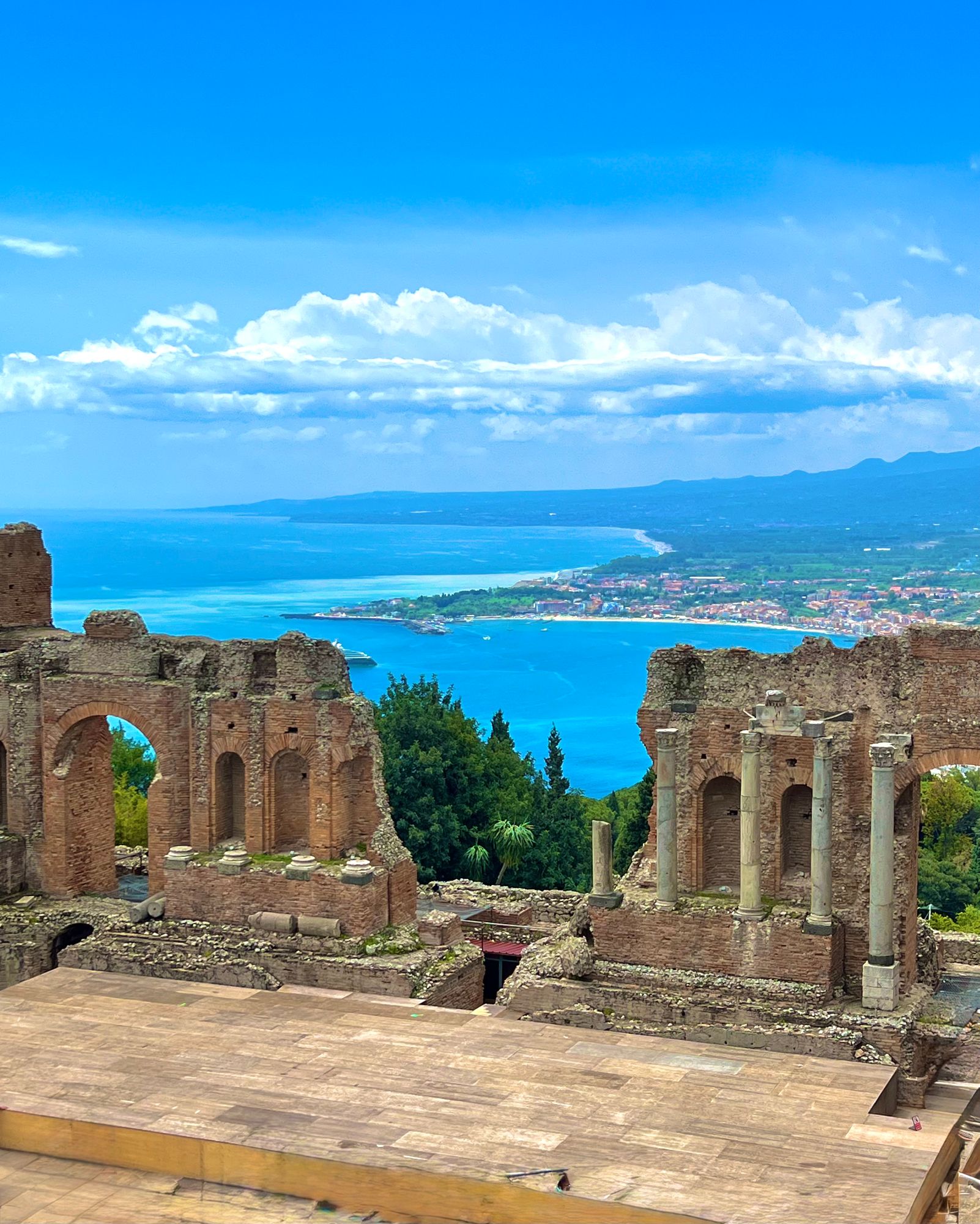
The ports of call offered a first-taste survey of the ancient world. In Kusadasi, he walked the marble-paved streets of Ephesus and stood at the House of the Virgin Mary, a site that carried a weight both historical and deeply human. In Santorini, he made the pilgrimage to Oia to photograph the famous three domes overlooking the caldera — a view so reproduced it risks feeling familiar, yet somehow, in person, refuses to be diminished. In Naples, the chaos of the Spaccanapoli brought the trip back to earth with the warm, grease-kissed pleasure of street food eaten standing up.
Asked what surprised him most, Scotti is characteristically direct. After two decades away, he had underestimated how much the experience would suit him. "Take me, feed me, make me see things and I don't have to worry," he says, laughing. It is a sentiment with more wisdom in it than it first appears. For a certain kind of traveller — accomplished, curious, but done with the administrative burden of getting from A to B — cruising is not a compromise. It is an answer.
Tuscany as a Deeper Dive
If the cruise was the first taste, coastal Tuscany was the long, slow meal that followed. Basing himself near Talamone, a fortified medieval fishing village perched on a rocky promontory above the Maremma coast, Scotti chose a home base that most visitors to Italy will never encounter. Talamone's Rocca Aldobrandesca watches over the sea from above, thermal winds draw kite surfers to the shore below, and the Maremma Natural Park stretches out beyond the town's ancient walls. It is not in the brochure. That is exactly why he chose it.
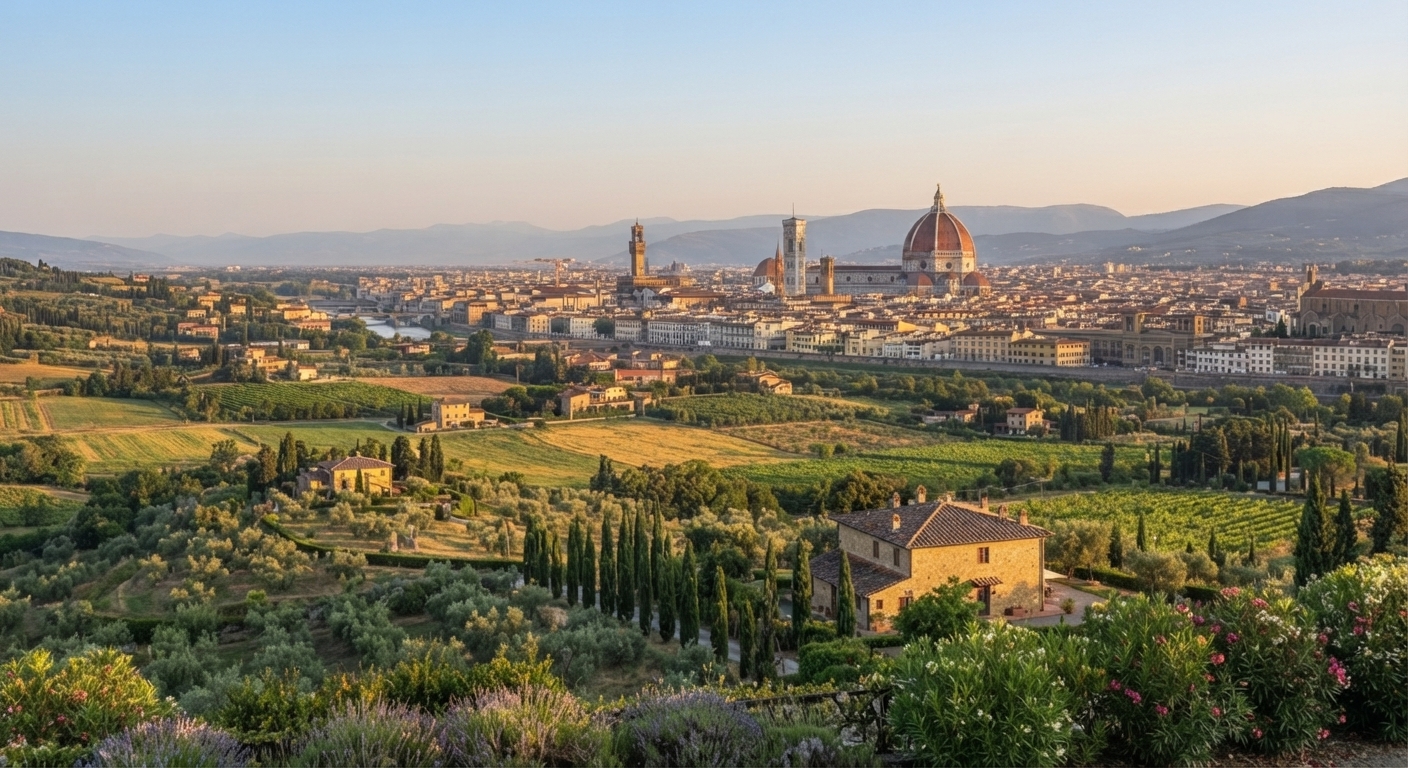
From there, the days unfolded with the kind of unhurried intention he advocates for his clients. In Siena, he walked the curve of the Piazza del Campo. In Florence, he sat down to bistecca alla fiorentina, the thick-cut Florentine steak that requires nothing more than fire, salt, and patience. In the hill town of San Gimignano, he joined the faithful queue outside Gelateria Dondoli, whose flavours have made it one of the most celebrated gelaterias in the world, and found that the reputation was entirely deserved.
But it was Pienza and Montalcino that lingered longest. Pienza, conceived in the 15th century as the ideal Renaissance city, offered landscapes of almost painful beauty — cypress-lined roads rolling toward a pale horizon, the kind of vista that makes one question why they ever went anywhere else. And in Montalcino, birthplace of Brunello di Montalcino, one of the world's most prestigious red wines, Scotti found the perfect conclusion to a journey built on the pleasures of place. The wine, the rolling hills, the local Pecorino and hand-rolled pici al ragu — it was, he says simply, falling in love again.
Italy Is Not One Country
It is here that Scotti arrives at the insight that gives this trip its real meaning, and that every one of his future clients will hear. "Italy is not one country," he says, "but rather 20 unique, different regions that you could spend a lifetime visiting and see maybe 5% of." It is the kind of reframe that stops you mid-sentence. Not a warning against ambition, but an invitation to think differently about return. Every trip to Italy is, by definition, incomplete. And that is the greatest possible reason to go back.
This philosophy shapes the way Scotti works. He is not interested in building itineraries that tick boxes. He is interested in building experiences that have rhythm and intention behind them. "The reco's come in the experience," he explains. "Do this, don't do that. It's important to understand flow and rhythm and build something that speaks to intention, not a check box." It is the difference between a trip that exhausts you and one that transforms you.
The Detail Most Travellers Miss
Among his most practical takeaways from the trip is one that costs relatively little but delivers disproportionate returns: the private transfer between Rome and the cruise port. It is the kind of logistical detail that experienced travellers tend to underestimate until they are standing on a Roman pavement with luggage and a deadline. "That peace of mind is worth the slightly higher cost associated," Scotti notes. Other options exist. But knowing that someone will collect you and deliver you, without detour or uncertainty, allows the trip to begin before you even step aboard.
He is clear about who benefits most from a journey like this one: established professionals, mid-to-upper-aged travellers, and experienced wanderers who want their curiosity sharpened rather than simply satisfied. The cruise, he suggests, works beautifully as a first chapter — a curated survey that reveals which places deserve a longer return.
The Next Horizon
Scotti is already looking ahead. France, England, and another Mediterranean cruise are on the list. He speaks about them with the quiet confidence of someone who has learned that every trip is both a destination and a doorway — that the best journeys do not end so much as open outward into the next one. For his clients, that forward momentum is the very thing he is best placed to guide. He has been there. He has eaten that. And he has figured out what the brochure does not tell you.
The question, as he frames it, is never simply where you want to go. It is who you are when you travel, and what kind of experience deserves to meet you there.