A Canadian travel advisor goes home to Hamburg for her father's 92nd birthday and comes back with something far more valuable than souvenirs: an unshakeable case for Northern Germany as one of Europe's most underrated destinations.
At a Glance
May is Hamburg's optimal travel window, combining the 835th Hafengeburtstag festival, white asparagus season, and temperatures exceeding 20°C. Beyond the city, visitors can experience the Wadden Sea tidal crossing on horseback to Neuwerk island, Baltic Sea harbour towns, and local markets like Isemarkt that reveal authentic Northern German life away from typical tourist routes.
The horses were knee-deep in the tidal pools when it hit her. Cold wind off the North Sea, the vast grey-green expanse of the Wadden Sea stretching in every direction, and the kind of elemental silence that only comes when a UNESCO World Heritage landscape reminds you how small you are. Nicola Radde, travel advisor and Hamburg native, was on horseback, crossing a tidal flat to the island of Neuwerk, soaked through with the kind of cold that Canada prepares you for but never quite softens. And she was completely, utterly happy. "Even with the cold, going through the Wadden Sea and having the wind blowing in your face and then warming up with a hot drink," Radde says, "it's really amazing."
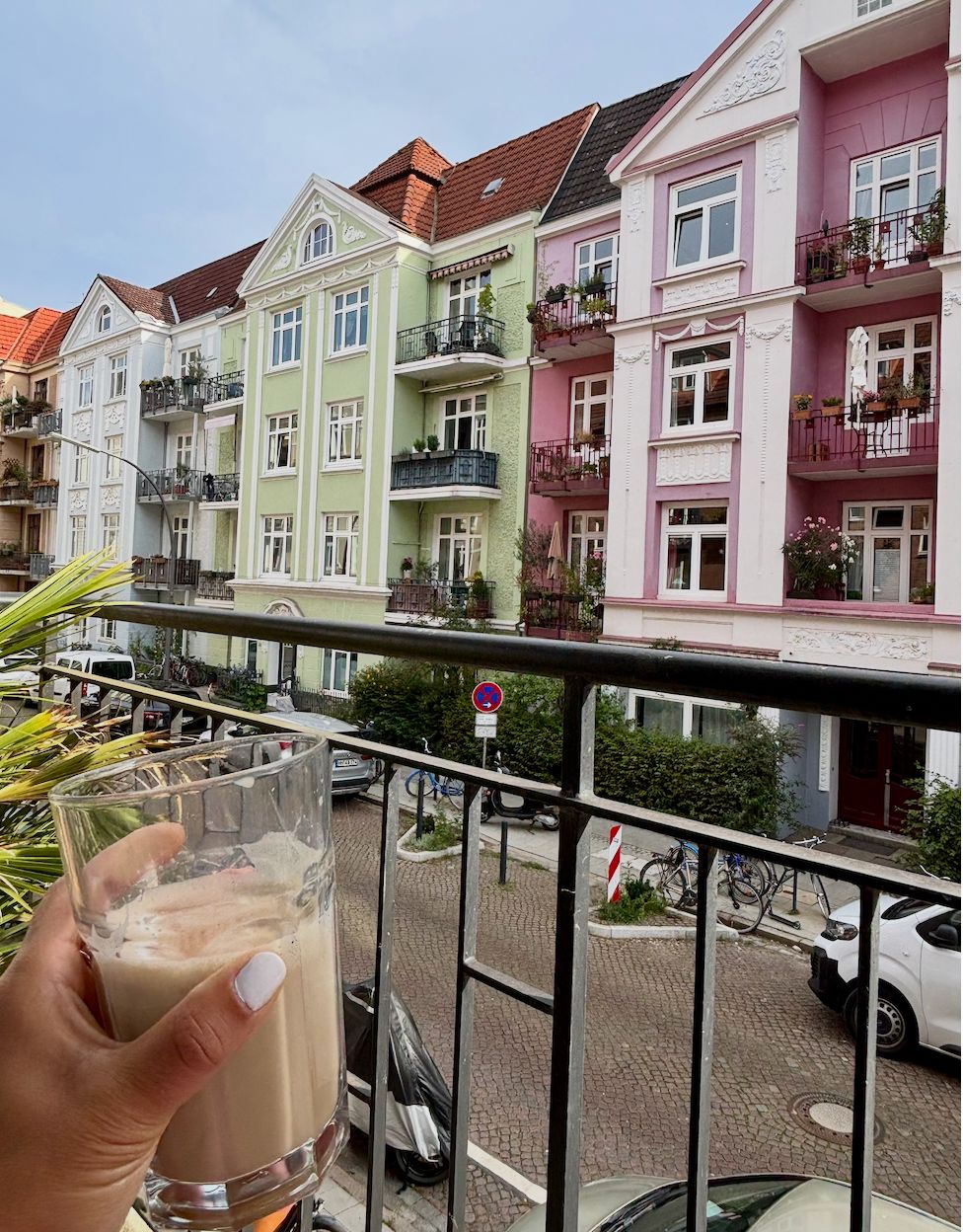
The trip began, as the best ones often do, with family. Radde returned to her hometown of Hamburg in May for her father's 92nd birthday, a pilgrimage she makes with quiet devotion. But what sets her apart from most returning daughters is the particular double vision she brings to it. She is, at once, the local who knows every shortcut and the traveller who notices everything. "This is my hometown," she says, "and I just love coming back and more like a tourist now." That paradox, the insider who sees with fresh eyes, is exactly what makes her one of Northern Germany's most credible champions.
May: Hamburg's Magic Window
Timing, Radde is quick to point out, is everything. May in Hamburg is not a compromise; it is a destination in itself. The city hums with a particular seasonal energy that layers festival upon festival, flavour upon flavour. The Hafengeburtstag, the Hamburg Harbour Anniversary, was celebrating its 835th year during her visit, filling the waterfront with bratwurst, Maibowle (a delicate May wine punch), and the kind of communal joy that spills off terraces and into the streets. Temperatures reached over 20 degrees Celsius, unusually warm even for May, giving the city a brightness that surprised even Radde, who thought she knew what to expect.
Then there is Spargelzeit. White asparagus season runs only from May until June 16th, and in Hamburg it is treated with the reverence of a liturgical calendar. Radde describes the fresh white spears as non-negotiable, a seasonal ritual that simply cannot be replicated outside those few fleeting weeks. Alongside it, Matjes, the fresh herring that defines Hamburg's culinary identity, eaten on a bun at a harbour-side stand or served raw with potatoes and a cream sauce. These are not tourist experiences. They are the tastes of a city being entirely itself.
One of the trip's most unexpected highlights was Hamburg Singt, a communal singing event held in one of the city's grand music halls. Words are projected onto screens. The audience sings together, every voice part of something larger, and by communal agreement, no recordings are made. The result is something rare and almost sacred: a room full of strangers choosing to be present. Radde and her sister went together, and the memory clearly still carries warmth. It is exactly the kind of unscripted, deeply local experience that no itinerary can manufacture but that a trusted advisor, one who actually knows the city's rhythm, can point you toward.
Beyond the City: Baltic Sea and the Wadden Crossing
Hamburg alone would be enough. But Radde's May trip extended outward, as good trips always do, into the quieter landscapes that most visitors never reach. She and her family travelled to Heiligenhaven on the Baltic Sea, a harbour town lined with sailboats and one of Germany's largest marinas, where beach walks slow the pace and the air smells like salt and open water. They stayed at Hotel Meerseite, a property that has become, in Radde's words, an almost annual tradition for her father's birthday. The cocktail program there, she notes with the specificity of someone who paid close attention, has won competitions. It is that kind of place.
From the Baltic, the journey continued to the North Sea coast and that Wadden Sea crossing on horseback, a bucket-list experience hiding in plain sight. The island of Neuwerk technically belongs to Hamburg, a geographic quirk that delights Radde every time she mentions it. The crossing is roughly twelve kilometres through the tidal flats, a route that changes with the tides and rewards those brave enough to attempt it with one of the most viscerally alive travel experiences in Germany. The cold, she insists, is beside the point. The hot drinks waiting at the end are very much the point.
The Market Under the Subway Line
It is one thing to know a city. It is another to know where the locals actually go on a Tuesday morning. Radde directs clients toward the Isemarkt, a weekly market running under an elevated subway line that stretches for almost a kilometre through a residential neighbourhood. Rain or shine, it doesn't matter. The tracks overhead keep the stalls dry and the musicians playing. There are vendors who sell only mushrooms, others who sell only candles, one who sells exclusively potatoes, in more varieties than most people know exist. "It's called the Isemarkt," Radde explains. "It's under a subway line, so it doesn't matter if it rains or shines. There are musicians playing and it's almost a kilometre long." This is the kind of detail that doesn't appear in guidebooks. It appears in the memory of someone who grew up going there.
The Northern Germany No One Talks About Enough
Part of what drives Radde's enthusiasm is a professional frustration she articulates with precision. Germany, in the popular imagination, defaults to Bavaria, the Black Forest, and Berlin. The north, with its maritime history, its flat dramatic coastlines, its UNESCO tidal flats and its charming harbour cities, is perpetually overlooked. For Radde, that is both a problem and an opportunity. "It rewards travellers with authentic experiences, fewer crowds, stunning landscapes, and a rich maritime culture that feels distinctly different from anywhere else in the country," she says. And perhaps, she suggests, the relative quiet is part of the appeal.
She is equally practical about how clients can reach it. A direct train now runs between Amsterdam and Hamburg, making Northern Germany a natural extension of any post-cruise itinerary. Amsterdam is already one of the world's great cruise ports, and for clients disembarking after an ocean voyage, the idea of a few days in Hamburg, followed by a Baltic escape and a Wadden Sea crossing, is suddenly a very easy sell. Radde is already building itineraries around exactly this logic.
She also flags the Smartmens serviced apartment concept as a discovery worth passing on. Modern, self-contained, cleaned weekly, with washers and dryers available in the building and a staff presence for anything extra, it offers a flexibility and practicality that traditional hotels sometimes can't match, particularly for families visiting relatives or travellers who want to feel, briefly, like they actually live somewhere.
What She Brings Back
The Kaffee und Kuchen revelation is, in Radde's telling, one of those small cultural shocks that recalibrates everything. The European afternoon tradition of coffee and cake, unhurried and unapologetic, struck her anew this visit as something genuinely foreign to Canadian life and genuinely worth protecting. "I am always surprised how different life is in Europe and Germany from here in Canada," she says, "and that people really enjoy that time and the tradition of coffee and cake." It is a small thing. It is also, somehow, everything.
Her broader professional lesson from the trip is one she hopes to pass directly to her clients: the willingness to step into local life rather than observe it from a safe distance. "I think sometimes we are just afraid to join into the local festivities or go off the beaten path," Radde reflects. "But it's so worth it." She intends to promote Northern Germany more actively than before, with itineraries that do justice to the full range of what the region offers, from the vibrant urban energy of Hamburg to the raw, wind-scoured beauty of the North Sea coast.
She returns to Hamburg again this summer, this time for her mother's 90th birthday. After that, she will be hosting a Moselle river cruise alongside a celebrated Ontario winemaker, with food and wine pairings and special events on board. The journeys, clearly, do not stop. And for her clients, neither does the invitation: Northern Germany is waiting, and there is no one better placed to take you there.