Travel advisor Jennifer McPherson arrived in Berlin expecting festive markets and left with ten revelations that no guidebook could have prepared her for.
At a Glance
Berlin's Christmas markets attract fewer North American tourists than other European capitals due to limited direct flights and exclusion from river cruise circuits, resulting in crowds dominated by locals. This accessibility challenge rewards prepared travelers with authentic seasonal experiences and unexpected encounters that reveal the city's complex relationship with history and present-day identity.
There is a particular kind of travel experience that cannot be packaged, photographed in advance, or promised in a brochure. It is the kind that arrives sideways, quietly dismantling everything you thought you knew about a place. For Jennifer McPherson, a travel advisor who visited Berlin with her husband during the city's Christmas market season last December, that is exactly what happened. She went for the mulled wine and the twinkling stalls. She came back with a profound reckoning with history, architecture, and the singular joy of a Friday night with strangers.
"I loved Berlin," McPherson says, "but not for the reasons I expected." That sentence, deceptively simple, is the whole story.
The City That Crowds Forgot
The first surprise came before McPherson even arrived. Berlin Brandenburg Airport, despite being relatively new and impressively large, is served by very few direct flights from North America. Add to that the fact that Berlin sits outside the river cruise circuit that funnels tourists through so many other European capitals, and the result is something increasingly rare in Christmas market season: a city full of locals. McPherson describes the dynamic as an unexpected gift, noting that the logistical friction of getting there meant they were "experiencing the Berlin Christmas markets mostly with locals. It was great."
For a travel advisor, this observation is more than a pleasant aside. It is a strategic insight. McPherson has since distilled it into a guiding principle she now carries across her practice: "Hard to get to is often a good sign, but make sure you have a plan." The caveat matters. Berlin's relative inaccessibility rewards the prepared traveler and quietly filters out the impulse booker.
The city itself disoriented her in another way entirely. Berlin is vast, flat, and ringed by open fields in a way that defies the European capital imagination. The scale of a single city block stopped McPherson in her tracks. It is the kind of spatial surprise that no map communicates, the kind that only registers when your feet are on the pavement.
A City Still Reading Its Own History
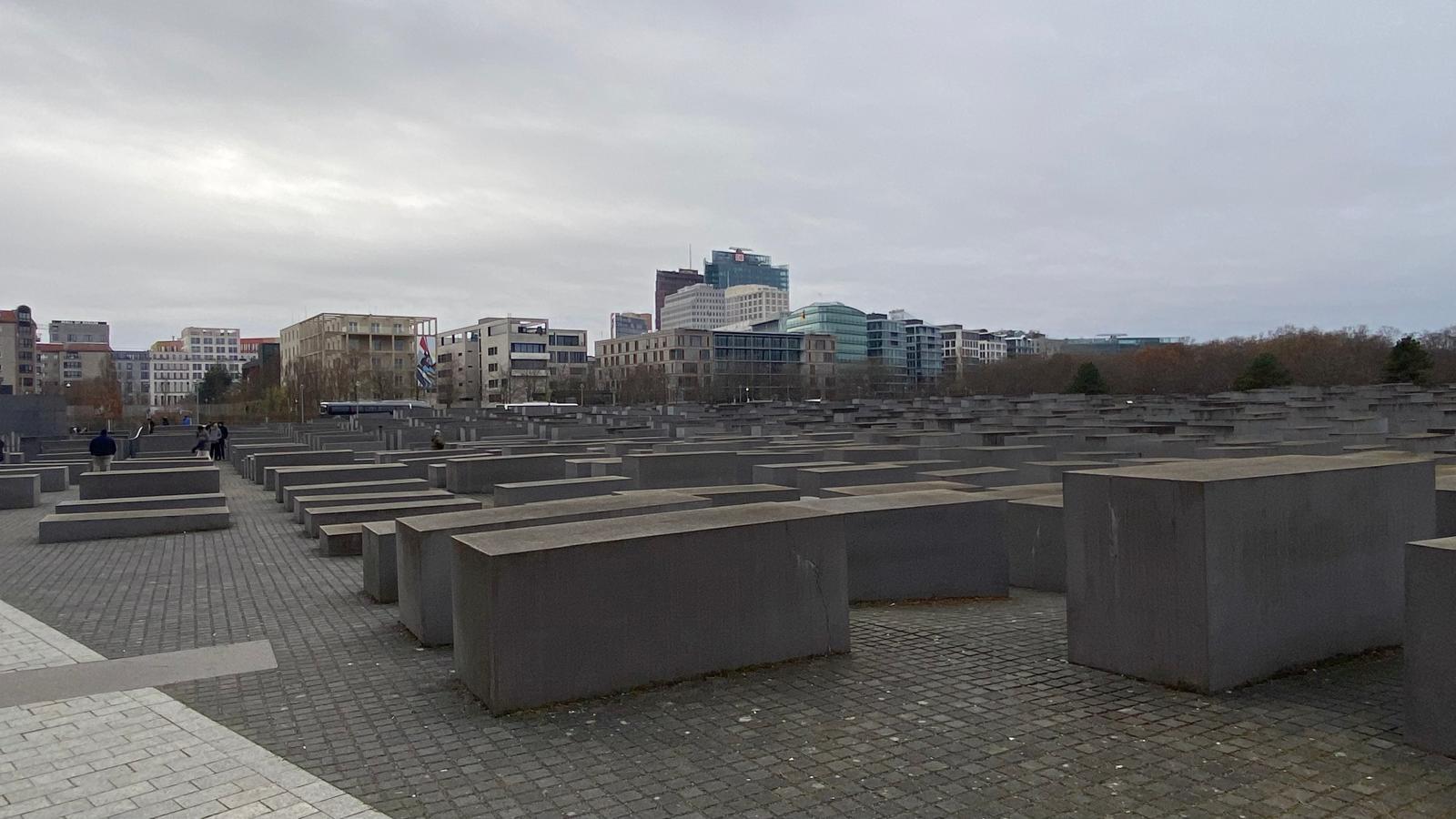
Berlin's relationship with its past is not simple, and McPherson did not arrive expecting it to be. But the nuance she encountered still caught her off guard. At the Holocaust Memorial, she found herself genuinely affected. She describes it as "profoundly moving and a thought-provoking experience unto itself," a place that earns its weight not through spectacle but through silence and scale. It is not a stop on the itinerary. It is the itinerary.
What struck her equally was the deliberate balance Berliners have struck in how they remember. The city memorializes its victims and its liberators with care and intention, while systematically minimizing the symbols of hatred and the Third Reich. It is a city that has done hard, conscious work on its own memory, and that work is visible everywhere if you know to look for it.
McPherson looked for it from above, too. Climbing the Fernsehturm, Berlin's iconic TV Tower, she noticed something she suspects most visitors miss entirely. From that height, the division between East and West Berlin is still legible, not through any remnant of the Wall, but through the architecture itself. The stark, utilitarian geometry of communist-era East Berlin sits in quiet contrast to the traditional timber-style homes of the west. McPherson notes that "few people seem to notice" this, which is precisely the kind of observation that separates an advisor who has stood there from one who has simply read about it.
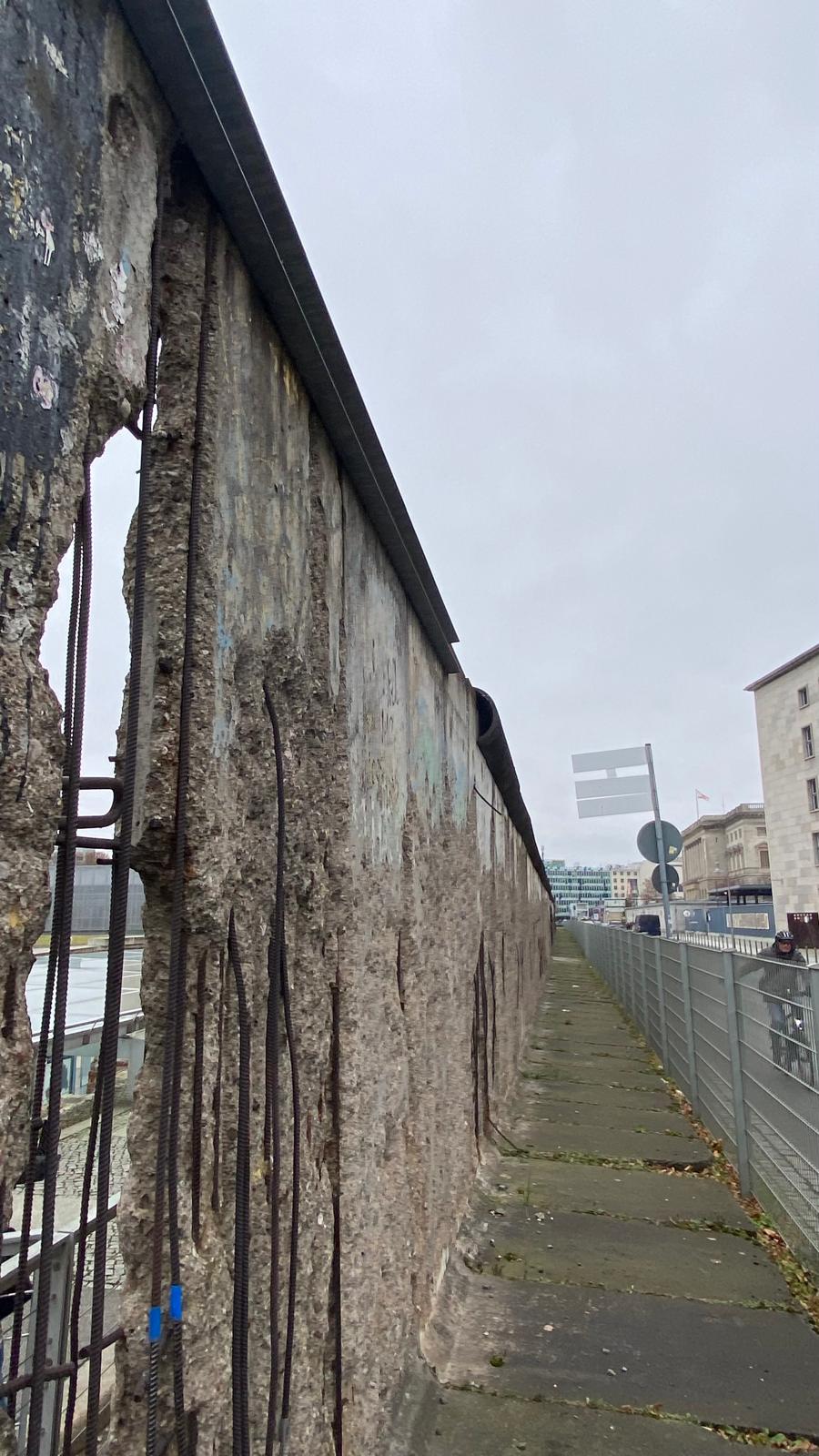
The Wall itself, she adds, is something every visitor must confront honestly. Very little of it remains. She urges anyone traveling to Berlin to visit the Gedenkstätte Berliner Mauer, the Berlin Wall Memorial on Bernauer Straße, where the historic border between East and West is preserved with the seriousness it deserves.
A City Still Becoming

Reunification may be decades old, but Berlin is still negotiating what it means to be itself. McPherson's guide spoke candidly about the city council's ongoing struggles, political gridlock born of genuinely conflicting values and beliefs. The famously troubled construction of Berlin Brandenburg Airport, years over budget and still not operating at full capacity, was offered as a symbol of that unresolved tension. It is a city in conversation with itself, and that conversation has not yet reached a conclusion.
Even the beer carries its own civic pride. McPherson's husband, a devoted admirer of Munich's brewing tradition, was surprised to discover how good Berlin's beer was, and how fiercely Berliners champion it as something distinct from their Bavarian rivals. Culture, it turns out, ferments in interesting ways in a divided city.
And then there is the history that predates the wars entirely. McPherson found herself most captivated by the deep European story that stretches back past the twentieth century's tragedies, to a time when Germania, a name coined by Julius Caesar himself, was already a force on the continent. Caesar governed the region before becoming emperor of Rome. It is the kind of fact that reframes everything, reminding the traveler that Berlin's story is longer, stranger, and richer than even its most famous chapters suggest.
It's Friday
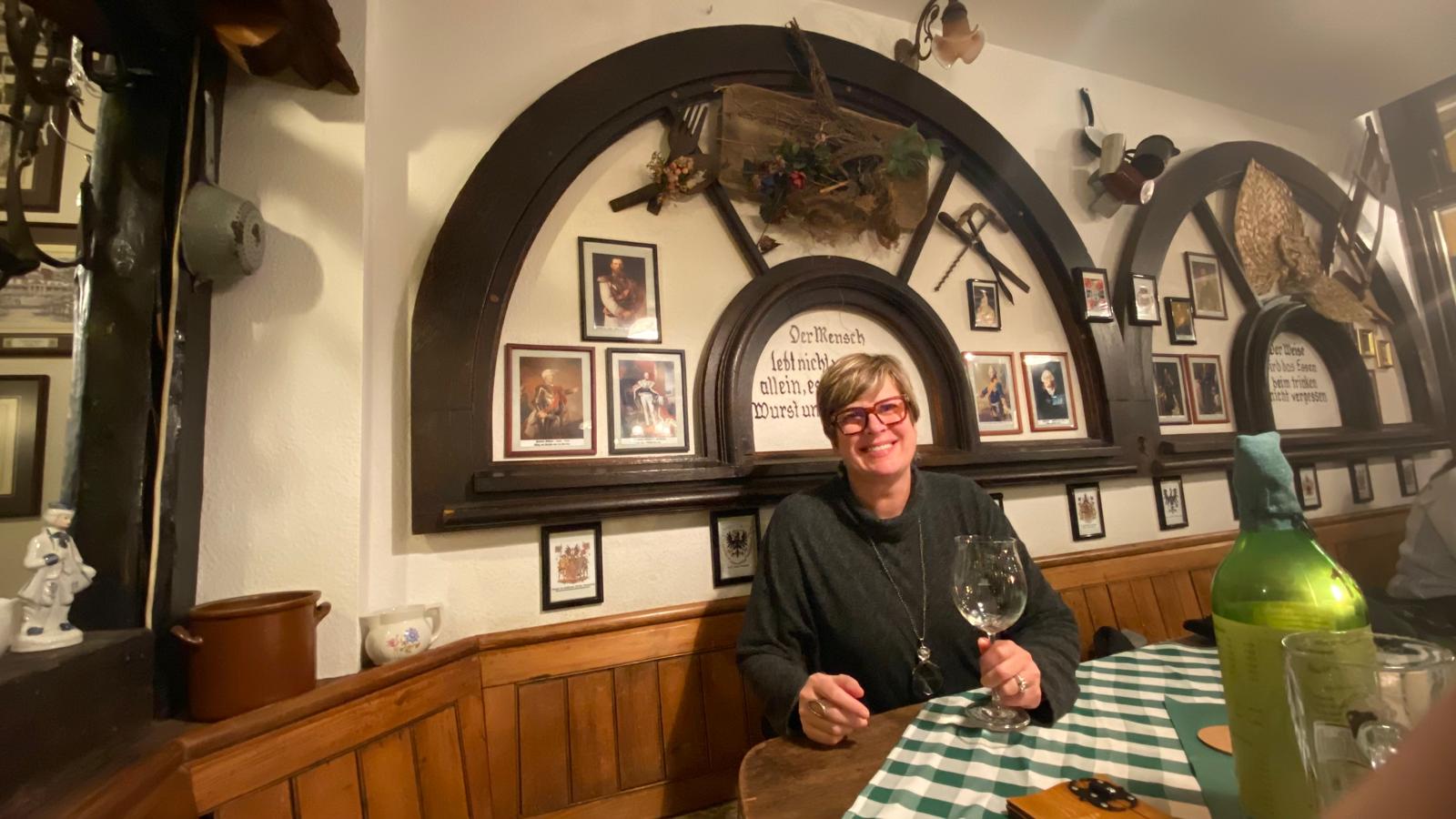
But it is a single, unscripted moment at a Christmas market food tent that McPherson returns to most often when she talks about this trip. She and her husband found themselves at a makeshift bar inside one of the market stalls, when a group of young Berliners, deep into a celebration that seemed to require another bottle of Prosecco, quietly slid it onto the McPhersons' table. Space was tight. The party needed room. A gesture was exchanged. The bottle stayed. A drink was offered.
McPherson asked the obvious question: what was the occasion? "The gentleman filling my glass looked at me and said, 'It's Friday.'"
That is Berlin. Not the Wall, not the weight of history, not the architecture or the airports or the political gridlock. Berlin is a city that has done the hard work of remembering so that it can be fully present. It celebrates because it can. The Christmas markets are not a backdrop for tourists. They are a reason for locals to gather, share a bottle, and raise a glass to the simple fact of another week lived.
Who Berlin Is For, and Who It Is Not
McPherson is a direct and honest advisor, and she extends that directness to this city. "If you don't love history," she says plainly, "don't go to Berlin." It is not a rebuke. It is a service. Berlin rewards the curious and the patient, the traveler who wants to feel the weight of a place and understand how it got here. It is not a city that performs for visitors. It asks something of them.
For those clients, the ones who show up ready to receive what Berlin offers, McPherson is now an advisor who has stood at the TV Tower and seen the seam of a divided city. Who has sat in silence at the Holocaust Memorial. Who has shared Prosecco with strangers on a Friday night and understood, in that moment, something essential about the people who live there.
Her next chapter is already taking shape. McPherson is hosting a curated Italy Food and Wine group trip in June 2027, taking travelers through both Tuscany and Emilia-Romagna in the north and Campania and the Amalfi Coast in the south, a deliberate comparison of two distinct Italian culinary worlds. It is the kind of experience only an advisor in constant motion can design. Berlin taught her that the road less traveled is worth the extra connection. She intends to keep proving it.