Shellie Sedore's Kenya Safari: When a Leopard Walked Past My Jeep
Kenya had been calling to me for years. As a travel advisor, I knew I needed to experience an African safari firsthand, not just study it from afar. When the opportunity came through an Exoticca FAM trip, I said yes immediately. I wanted to understand the rhythm of the bush, the reality of game drives, and what it truly feels like to be surrounded by wildlife in their natural habitat.
What I discovered exceeded every expectation I had carried with me.
The Encounters That Changed Everything
The diversity of wildlife alone was staggering. Elephants, giraffes, lions, zebras, leopards, cheetahs, baboons, gazelles, hyenas, monkeys, impalas, wildebeest, buffalo, hippos, and bushbucks. I saw them all. But it was the intimate, unscripted moments that truly took my breath away.
One afternoon, we spotted a leopard shortly after it had made a kill. Leopards often place their prey in trees to protect it from hyenas, and this one was resting nearby. Then, without warning, it stood and stretched in full view of our jeep. What happened next still gives me chills. The leopard walked directly toward us, passed alongside our vehicle close enough that I could see the pattern of its spots, paused for a drink, and vanished into the tall grass. That moment of stillness, of witnessing something so wild and unhurried, is something I will carry forever.
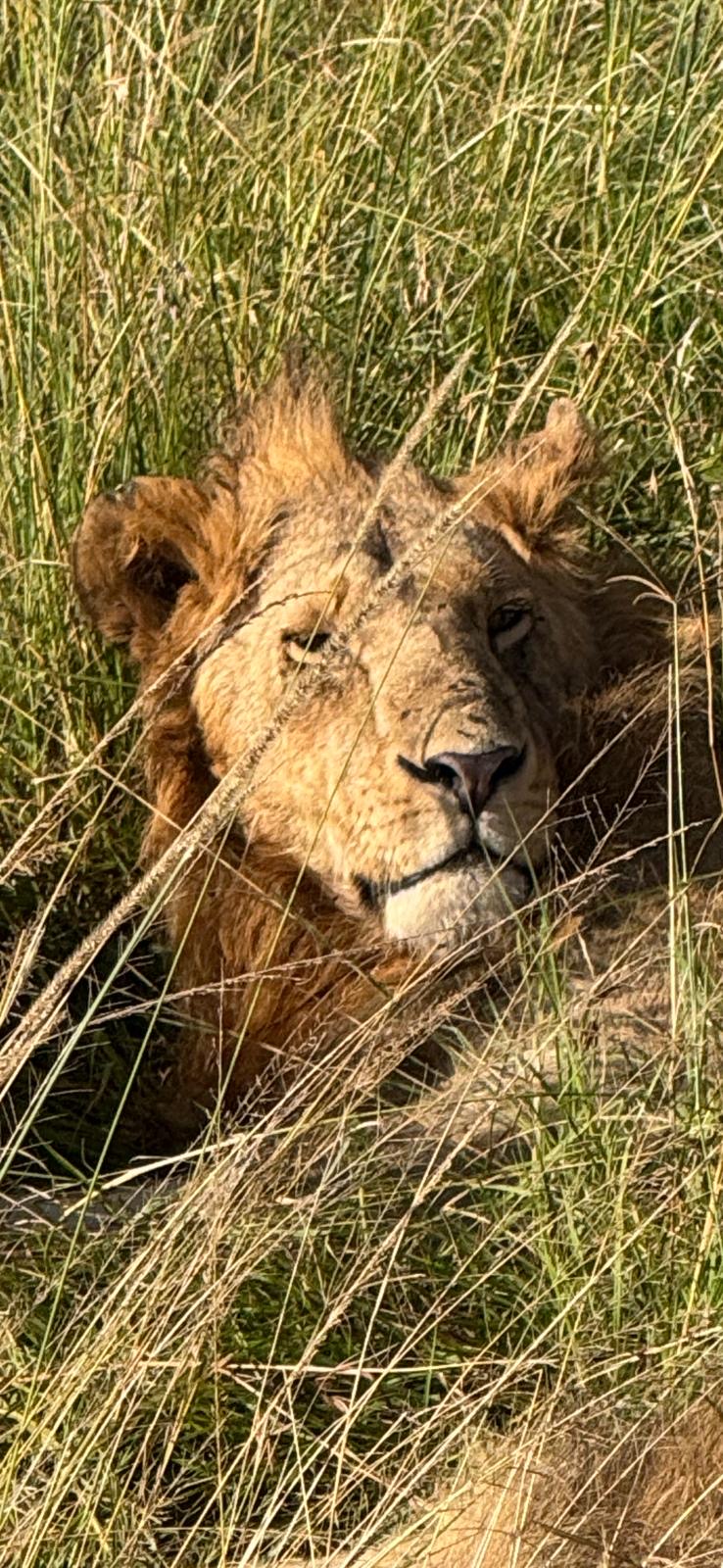
We also experienced a hot air balloon safari that offered an entirely different perspective on the landscape below. After landing, we encountered four of the famous R5 brothers, a group of lions believed to be forming their own pride. They were resting when we arrived, and we were able to get surprisingly close. At one point, something startled them, and two lions sprang up facing our open jeep. My heart pounded. But our guide calmly explained that lions view the vehicle as one large object, not prey. Within seconds, they relaxed and went back to their day. That trust in our guides made all the difference.
Experiences Beyond the Game Drives
Our accommodations were unforgettable in their own right. One hotel had giraffes and zebras roaming freely around the property, with fencing only to keep hippos (surprisingly dangerous animals) from wandering in. At The Ark Lodge, we crossed a bridge to reach a lodge overlooking a massive watering hole. Once inside, you cannot leave. We watched buffalo, elephants, hyenas, and genets from multiple viewing areas, including a ground level bunker. Rain reduced our sightings since animals found water elsewhere, but I learned a valuable lesson: weather shapes everything on safari.
We also visited a traditional tribal village where life looked nothing like our everyday routines. Families lived in small homes made from mud and cow dung, with no electricity or running water. Breakfast was cow's milk mixed with cow's blood. Children attended school partly for the midday meal it provided. We witnessed tribal dances, jumping competitions, and fire starting using only sticks and dried grass. It was humbling and eye opening.
Who This Trip Is Made For
This experience is perfect for adventurous souls of any age, whether you are traveling as a couple, a family, or solo. However, I would caution anyone with back problems or mobility concerns. The drives are long and bumpy, with early morning departures that require physical stamina.
My insider advice? Early morning and late afternoon drives are essential for spotting predators. Keep your binoculars accessible and your camera ready at all times. Sit near the front of the vehicle for better angles. And most importantly, embrace uncertainty. Wildlife sightings can never be guaranteed, and that unpredictability is part of what makes each encounter so meaningful.
Now that I have lived this adventure, I can speak to the accommodations, the guides, and the ideal pace with genuine authority. I know who will thrive here and who might find it challenging. And I cannot wait to help my clients experience the same magic that left me forever changed.